


September 2026: Philip Morris International Opens First Global IQOS Flagship Store in Ginza, Tokyo
Philip Morris International (PMI) has officially opened its first global IQOS flagship store in Tokyo’s premier Ginza shopping district. The new “IQOS Flagship Ginza” opened its doors on September 4, 2026, marking a major milestone for the smoke-free product line. The new location replaces the long-running IQOS Store Ginza, which permanently closed on August 30, 2026 after operating at the site since March 2017.
Located at 1-8-14 Ginza in Chuo Ward, the two-story store serves as PMI’s flagship retail concept worldwide, blending contemporary design with traditional Japanese craftsmanship. The entrance features a centerpiece chandelier created by acclaimed Japanese artist Takahiro Matsuo. Inside, the lounge showcases an artwork of the IQOS logo inspired by sunagomaki (a traditional gold-dusting technique), while product display walls seamlessly integrate traditional Kumiko woodwork with 3D design elements. The upper floor houses an exclusive Premium Lounge reserved for registered IQOS users. Designed around the changing rhythms of nature, the lounge features a 270-degree panoramic digital screen alongside a dedicated space where members can enjoy curated specialty coffees and premium teas.
To mark the grand opening, PMI is hosting a 10-day “Celebration Week” running from September 4 to September 13, 2026. As part of the festivities, the flagship is offering a limited-edition culinary collaboration with globally renowned pastry chef Sadaharu Aoki, providing visitors with exclusive “Sadaharu AOKI paris” dessert sets and beverage pairings.
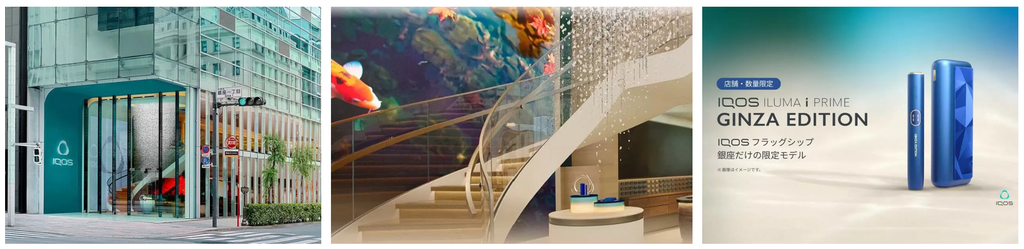
PMI also unveiled an ultra-exclusive product created specifically for the opening: the “IQOS ILUMA i PRIME Ginza Limited Model Set.” Finished in a unique “Oasis Blue” colorway, the device comes bundled with a set of two hand-crafted Yamanaka lacquerware glasses. In a nod to the store’s street address (1-8-14 Ginza), the release is strictly limited to 1,814 individually serialized units sold exclusively at the new Ginza location.
July 2026: JT Files for Second Heated Tobacco Price Hike in Japan Ahead of October Tax Revision
Japan Tobacco (JT) has submitted an application to Japan’s Ministry of Finance to increase retail prices across its entire lineup of Ploom heated tobacco sticks, effective October 1, 2026. The driver behind the planned price increase is the Japanese government’s ongoing revision of the heated tobacco tax framework. Regulators are gradually raising excise duty on heated tobacco products to narrow the tax gap between next-generation alternatives and conventional combustible cigarettes.
The planned October adjustment marks the second price hike for JT’s heated tobacco portfolio in 2026, following a ¥30 ($0.20) per pack increase implemented on April 1. Implementing two price increases within a single calendar year is highly unusual for Japan’s retail market, where consumer prices – particularly for tobacco products – have historically remained flat for extended periods outside of major periodic tax overhauls. Combined, the April and October adjustments will raise the cost of Ploom consumables by a cumulative ¥70 ($0.46) per pack in 2026.
Pending Ministry of Finance approval, prices across all 31 Ploom consumables will increase by ¥40 ($0.26) per 20-stick pack on October 1:
– EVO Series (Premium): Rising from ¥580 ($3.80) to ¥620 ($4.05) per pack.
– Mevius Series (Mainstream): Rising from ¥550 ($3.60) to ¥590 ($3.85) per pack.
– Camel Series (Value): Rising from ¥530 ($3.45) to ¥570 ($3.72) per pack.
While tax-led price hikes may temper overall category growth, the adjustments are expected to disproportionately impact the lower end of the market. Because flat-rate increases represent a higher percentage jump for value brands, price-sensitive consumers in the value segment are likely to feel the effect more acutely than buyers in the premium tier.
May 2026: Japan Considers Tighter Restrictions on Heated Tobacco
Japan is reportedly considering additional restrictions on heated tobacco products as part of a broader tightening of public smoking regulations. The move reflects an ongoing policy shift toward stricter control of smoking in public spaces in Japan, the world’s largest heated tobacco market.
The potential regulatory changes focus on how heated tobacco is used in public environments. Authorities are increasingly reviewing whether these products should face rules similar to combustible cigarettes regarding where they can be consumed, particularly in urban areas where smoke-free policies have already been significantly strengthened.
A key reference point in the policy discussion is an assessment from Japan’s Ministry of Health, Labour and Welfare, which reviewed available scientific evidence on heated tobacco and concluded that while emissions of certain harmful substances may be lower compared with conventional cigarettes, the products are not risk-free and still expose users and bystanders to nicotine and other harmful compounds. This assessment has been widely cited in ongoing debates over whether heated tobacco should be treated differently under public health regulations.
Key elements of the evolving direction include tighter control of smoking in public spaces, with heated tobacco increasingly considered within broader smoke-free frameworks. Local governments, particularly in major cities such as Tokyo and Osaka, continue to expand designated no-smoking zones and reduce areas where smoking – including heated tobacco use – is permitted. Policymakers are also weighing whether existing distinctions between combustible cigarettes and heated tobacco products remain appropriate in the context of secondhand exposure and urban air quality objectives.
The discussion reflects Japan’s gradual shift toward more restrictive public smoking norms, even as heated tobacco has become deeply embedded in the country’s tobacco landscape over the past decade. Any further tightening of public-use rules could reduce the visibility and social use of heated tobacco products, reinforcing a broader trend toward stricter smoking environments in Japanese cities.
March 2026: BAT Holds Heated Tobacco Prices in Japan Despite Tax Increase
British American Tobacco (BAT) has decided not to pass on Japan’s upcoming tobacco tax increase to consumers, opting instead to keep prices unchanged across its entire heated tobacco portfolio. The move stands in contrast to competitors and signals a deliberate pricing strategy aimed at strengthening competitiveness in a key market.
From April 1, 2026, Japan will implement a new round of tobacco tax increases, foremost affecting heated tobacco products. While most manufacturers are expected to raise prices in response, BAT Japan has confirmed that all 38 variants of its glo-exclusive sticks will remain at current price levels. This includes products across four major brands: virto (9 variants), neo (9 variants), Lucky Strike (9 variants), and Kent (11 variants).

Under this decision, pricing will remain stable across the portfolio. Virto sticks, designed for the glo HILO device, will continue to retail at ¥580 per pack. Neo products, including those for glo Hyper, will remain priced at ¥500. Lucky Strike variants for glo Hyper will stay at ¥450, maintaining their position as a value offering within the category. Meanwhile, Kent sticks will remain at ¥500 for regular formats and ¥550 for slim formats, although the Kent slim line is expected to be discontinued once existing inventory is depleted.
BAT’s decision diverges from the approach taken by its main competitors, Philip Morris International (PMI) and Japan Tobacco (JT), both of which are expected to implement price increases across their heated tobacco portfolios, including IQOS and Ploom products, in line with the tax hike. The broader tax framework in Japan foresees a gradual increase in tobacco taxation through April 2029. Already, taxes account for more than 60% of the retail price of a standard pack of cigarettes, and this proportion is set to rise further as staged increases take effect over the coming years.
Against this backdrop, BAT’s decision to absorb the tax increase rather than pass it on to consumers reflects a strategic trade-off. By maintaining price stability, the company may seek to reinforce its value positioning, protect market share, and potentially attract price-sensitive consumers from competing platforms facing price increases.
March 2026: Japan Raises Tobacco Taxes to Fund Defense Spending
Japan will increase tobacco taxes starting in April 2026 as part of a broader effort to secure financial resources to strengthen national defense capabilities. The tax changes will affect both conventional cigarettes and heated tobacco products, with increases implemented in multiple stages over several years.
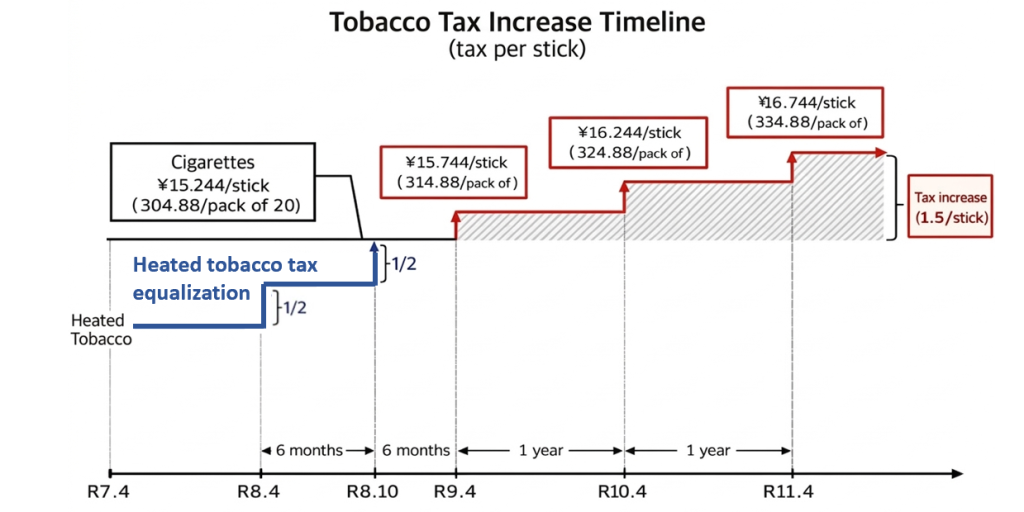
The government will introduce two rounds of tax increases on heated tobacco products in April 2026 and October 2026. These increases will bring heated tobacco taxation in line with conventional cigarettes, resulting in a unified tax rate of ¥15.244 per cigarette or heated tobacco stick. Beginning in April 2027, both conventional cigarettes and heated tobacco products will be subject to further tax increases in three annual stages. Each annual increase will add ¥0.5 per cigarette or stick, gradually raising overall tobacco taxation.
In response to the tax increase, Philip Morris International will raise the retail prices of 66 heated tobacco sticks for IQOS devices on April 1, 2026. Prices for the TEREA series will increase from ¥580 to ¥620, while prices for the SENTIA series will rise from ¥530 to ¥570. Japan Tobacco will also increase prices, raising the prices of 37 heated tobacco sticks for Ploom devices by ¥20 to ¥30, effective the same day. British American Tobacco, the maker of the glo heated tobacco series, is also expected to announce price revisions in the near future.
October 2025: Heated tobacco is close to capturing 50% of the Japanese tobacco market
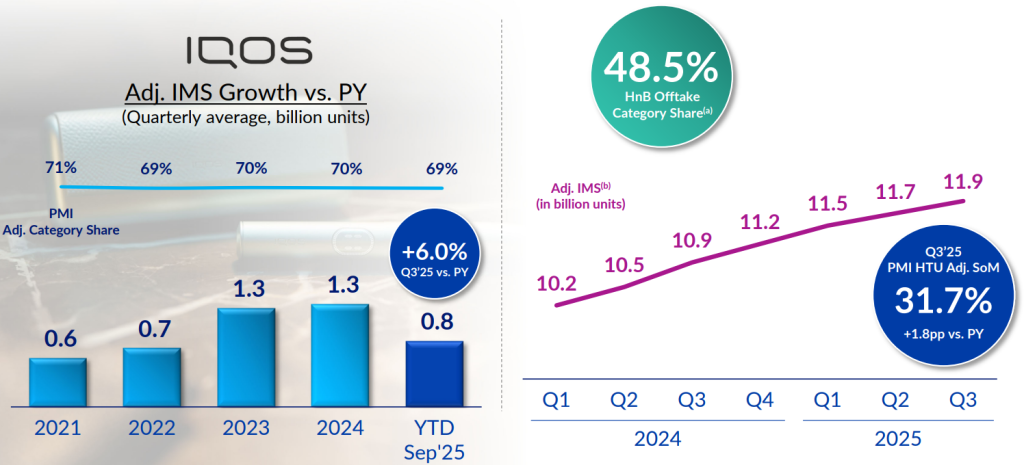
IQOS-owner Philip Morris International (PMI) stated that the heated tobacco category exceeds 50% of the total tobacco share in 14 out of 20 major cities and 10 out of 47 prefectures in Japan. As of September 2025, heated tobacco reaches 48.5% share in total tobacco sales (cigarettes, cigarillos, heated tobacco) based on the off-take data from three major convenience store chains.
IQOS leads the category with 69% category share in YTD September 2025, ahead of Japan Tobacco’s Ploom and British American Tobacco (BAT)’s glo. In Q3 2025, IQOS in-market sales grew by +6% (0.8 billion sticks) in a flattish overall tobacco market (+0.5%), resulting in a share increase of +1.8pp year-on-year-basis to 31.7%.
October 2025: BAT is set open glo flagship store in Tokyo’s Ginza district
British American Tobacco (BAT) will open its glo flagship store in Ginza, one of Tokyo’s most prestigious shopping districts, on October 18, 2025, with the grand opening campaign running through October 24.
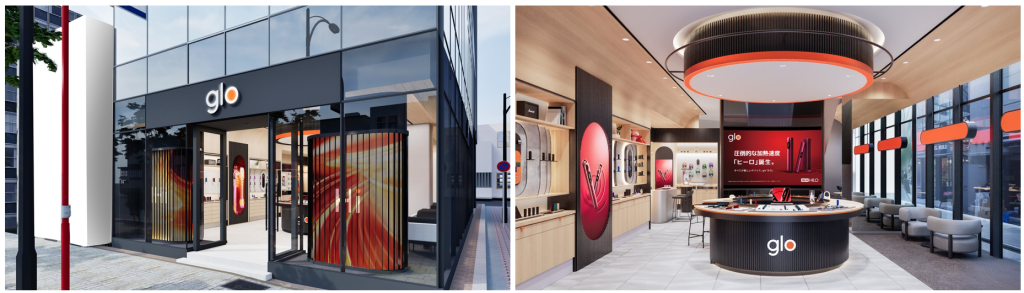
The glo Store Ginza will offer visitors the opportunity to experience and purchase BAT’s latest heated tobacco devices – including glo HILO Plus, glo HILO, and glo Hyper Pro – alongside a full range of heated tobacco sticks such as virto, neo, KENT, and Lucky Strike. The first floor will also feature a selection of glo accessories and VELO nicotine pouches, as well as after-sales support and a personalized engraving service for glo devices.
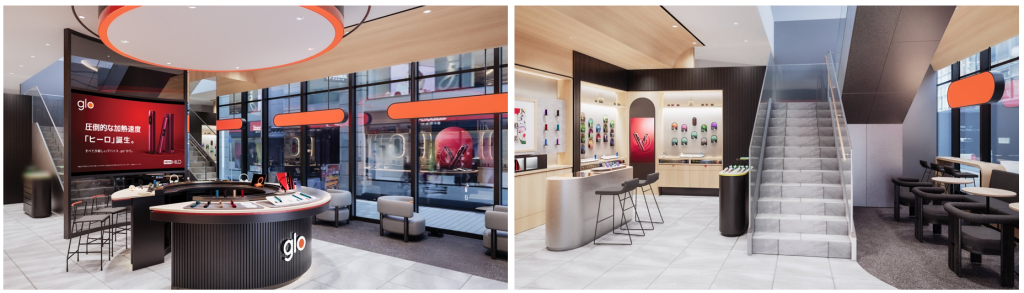
A second-floor glo Members Lounge is scheduled to open at a later date, providing an exclusive heated tobacco space for registered glo members. BAT plans to host brand events, product showcases, and exclusive content experiences within the flagship store.
Strategically located near the IQOS Ginza store, the new glo flagship store is designed to mirror its rival’s location, layout, and experiential concept, underscoring BAT’s ambition to strengthen its presence in Japan’s competitive heated tobacco market.
July 2025: Recycling of heated tobacco devices will become mandatory in Japan
The Japanese government plans to make it mandatory for manufacturers and importers to collect and recycle heated tobacco devices in response to increasing number of fires caused by lithium-ion batteries in these items. The new regulations will prohibit consumers from disposing heated tobacco devices as general waste and require them to cooperate with stores and municipal facilities in collection initiatives.
A 2024 survey conducted by the Internal Affairs and Communications Ministry revealed that heated tobacco devices account for 15.9% of the lithium-ion battery waste in Japan – second only to power banks (19.4%) and ahead of mobile phone (12.4%). According to the Environment Ministry, there were 21,751 incidents of smoke or fire caused by small lithium-ion batteries in waste collection vehicles, garbage-disposal facilities and other locations in FY23.
The Government will designate power banks, heated tobacco devices and mobile phones as “specified resources-recycled products” under the Law for the Promotion of Effective Utilization of Resources. As for designated products, manufacturers and importers are obligated to conduct collections and recycling through organizations that handle such services. The Economy, Trade and Industry Ministry and the Environment Ministry are expected to formalize the decision in August 2025, following discussions with manufacturers, importers and other relevant entities. These products will be added to the list of the specified products through a government ordinance when the revised law takes effect in April 2026. Under the new designation, businesses that fail to conduct collection and recycling operations will face fines. Consumers will be required to dispose of heated tobacco devices appropriately, such as by depositing them in designated collection boxes at electronics retailers or local government facilities1.
October 2024: Tokyo Subdivision Extends Street Smoking Penalties to Heated Tobacco Products
Chiyoda Ward, a central Tokyo subdivision known for the popular electronics and tourism hub of Akihabara, has expanded its public smoking restrictions to include heated tobacco devices. Effective November 1, 2024, the local administration has outlawed the use of heat-not-burn products on public streets, authorizing enforcement officers to issue on-the-spot financial penalties to violators.
The policy builds upon a historic 2002 local ordinance, which established Chiyoda Ward as the first municipality in Japan to legally prohibit traditional cigarette smoking on streets and within public parks. Under the existing enforcement framework, dedicated ward staff regularly patrol public sectors and levy an immediate, non-refundable fine of ¥2,000 against anyone caught violating the street-smoking ban. The strict nature of the local enforcement program is reflected in municipal data, which shows that Chiyoda Ward officers issued more than 5,600 individual smoking citations over the course of 2023 alone.
While municipal officers previously restricted enforcement actions solely to combustible cigarette smokers, a sharp rise in formal complaints from local residents regarding public vapor emissions and congestion prompted the Chiyoda administration to formally extend the consumption bans to the heated tobacco category. To accommodate remaining users, the ward maintains a network of specifically designated outdoor smoking areas within its administrative borders, outside of which all tobacco consumption remains illegal.
The implementation of street-level fines represents a notable shift in the Japanese tobacco landscape. Historically, the ability to utilize heat-not-burn devices like IQOS in outdoor areas and specific indoor hospitality venues where conventional smoking was banned served as a primary commercial advantage for the category. As consumer adoption of heated tobacco continues to grow across Japan, regulatory analysts expect that an increasing number of municipal and regional administrations will introduce matching public consumption restrictions to regulate the sector.

