


October 2026: UK Imposes Sweeping New Restrictions on Vaping and Nicotine Products Starting October 29, 2026
A comprehensive set of new regulations aimed at curbing youth access to e-cigarettes will take effect across the United Kingdom on October 29, 2026. The nationwide measures introduce strict bans on automated sales, promotional giveaways, and underage purchasing, reinforcing the government’s ongoing public health campaign to protect minors and regulate nicotine markets.
Under the new rules, vape vending machines will be prohibited across all commercial establishments throughout the UK, including pubs and bars. The ban covers any mechanical or automated setup allowing customers to acquire vaping or herbal smoking products. The legislation standardizes a firm minimum age requirement of 18 for all vaping, tobacco, and nicotine products. Selling these items – including nicotine-free vapes, e-liquids, and refill pods – to anyone aged 17 or under will constitute a criminal offense. Furthermore, the law explicitly criminalizes proxy purchasing, making it unlawful for any adult to buy or attempt to buy nicotine products on behalf of a minor.
To diminish the appeal of vaping to young people, the regulations also outlaw promotional marketing tactics:
– Free Samples: Distributing free vaping or nicotine products as promotional giveaways becomes illegal.
– Price Reductions: Selling vaping items at a significant discount specifically intended to market or advertise the product is prohibited.
– Discount Coupons: Offering or distributing coupons at a considerable reduction to promote nicotine items will also be treated as a criminal offense.
Enforcement agencies across the country are preparing to implement the measures as part of a wider government strategy to tackle the rising prevalence of youth vaping.
September 2026: BAT Lobbies Against Tougher Rules in UK Vape Crackdown
British American Tobacco (BAT) is mounting a major lobbying campaign against proposed UK government regulations that would introduce plain packaging, device appearance restrictions, and point-of-sale display bans for e-cigarettes. Ahead of the government’s public consultation deadline on October 2, 2026, the company is encouraging UK retailers and trade organizations to submit formal opposition to the secondary legislation being drafted under the Tobacco and Vapes Act.
BAT bases its opposition on both financial impact and harm-reduction arguments. Citing the UK Department of Health’s own impact assessment, BAT highlights that hiding vapes from shop displays and imposing strict standardized packaging could cost UK retailers over £420 million in lost profits by 2036, while burdening small newsagents and vape shops with high compliance costs. Furthermore, BAT contends that wrapping vapes in drab packaging and hiding them behind counter doors erases the visual distinction between combustible cigarettes and less harmful alternatives, ultimately deterring adult smokers who might otherwise switch. Instead of mandatory plain packaging and retail display bans, BAT is advocating for a mandatory retailer licensing scheme, targeted design restrictions on child-appealing graphics or shapes, and stricter border enforcement to curb illegal, non-compliant vapes.
| Category | Proposed UK Government Rules |
| Packaging | Standardized plain packaging across all vaping and nicotine products, including restricted colors, simplified typography, and mandatory graphic warnings. |
| Device Design | Limits on physical device features, including bans on digital screens, bright colors, and shapes imitating non-vape products. |
| Flavor Names | Restrictions on descriptive flavor titles, banning names such as “Unicorn Milk” or “Gummy Bear.” |
| Retail Display | Ban on open shelf or counter displays, requiring products to be kept behind covered shutters or in under-counter drawers. |
This push comes during a major regulatory shift for the UK nicotine market throughout 2026. Following the ban on single-use disposable vapes in June 2025 and the passage of the Tobacco and Vapes Act in April 2026, the government introduced the Vaping Products Duty on October 1, 2026, adding a tax of £2.20 per 10ml of e-liquid alongside mandatory official duty stamps. The closing of the public consultation on October 2, 2026, represents the final opportunity for industry stakeholders to influence the final wording of the packaging and display mandates before ministers draft binding secondary legislation.
August 2026: UK Government Outlines New Fixed Penalty Notices and Operational Guidance for Tobacco and Vaping Violations
The UK Department of Health and Social Care (DHSC) has published detailed guidance on the rollout of Fixed Penalty Notices (FPNs) and related enforcement rules for offences related to tobacco, vaping, and nicotine products under the landmark Tobacco and Vapes Act 2026. The new framework gives enforcement agencies, including local Trading Standards officers across England, Wales, and Scotland, and local councils in Northern Ireland, direct power to issue immediate financial fines to retailers and individuals who violate age restrictions and sales regulations.
Key Enforcement Timeline & Requirements
October 29, 2026: FPN enforcement will expand across the UK to cover underage sales (under 18) and proxy purchasing for a broader range of items. This includes traditional tobacco, herbal smoking products, cigarette papers, vaping devices, and oral nicotine products such as nicotine pouches, strips, and pearls. FPNs will also target unauthorized vending machine availability, free promotional giveaways, and heavy discount offers intended to market nicotine products.
January 1, 2027: Enforcement will step up to cover the UK’s generational smoking ban. From this date, issuing an FPN will apply to anyone selling or proxy purchasing tobacco products, herbal smoking items, or cigarette papers for individuals born on or after 1 January 2009. Retailers will also be required to display updated mandatory age-of-sale signage (“It is illegal to sell tobacco products to anyone born on or after January 1, 2009”) reflecting the new date of birth restriction.
Product Scope and Specific Restrictions
The guidance makes clear that all forms of nicotine – including lab-manufactured synthetic variants – fall under the new regulatory scope, though medical devices and standard accessories like batteries remain excluded.
– Complete Vending Machine Ban: Beginning October 29, 2026, it will be an offence to operate customer-facing vending machines dispensing tobacco, vaping, or nicotine products. Machines may only remain on-site if placed out of customer access as staff-assisted storage. Automated vaping machines are permitted solely in adult mental health inpatient settings in England and Wales.
– Promotions & Free Distributions: Retailers are prohibited from giving away free samples or coupons and from offering “substantial discounts” (e.g., selling devices or liquids for nominal sums like 10p) to promote vaping or nicotine products. Publicly funded stop-smoking programs remain exempt.
– Scottish Staffing Requirements: In Scotland, workers under 18 must have formal, written authorization on file from the premises holder to sell vaping or nicotine products.
Penalties and Repeat Offenders
An FPN of £200 in England, Wales, and Scotland (£250 in Northern Ireland) can be issued directly for underage sales, proxy purchasing, illegal giveaways, or unauthorized vending. Alternatively, summary convictions carry court fines up to £2,500 (£5,000 in NI), while serious promotional violations tried on indictment can result in unlimited fines and up to 2 years’ imprisonment.
In addition to immediate fixed fines, the guidance warns that repeat offenders face severe operational sanctions. Retailers caught committing relevant offences three or more times within a two-year window (five years in Northern Ireland) could be served with restricted sales or premises orders, banning them from selling tobacco or vaping products for up to 12 months in England and Wales, 2 years in Scotland, and up to 3 years in Northern Ireland.
July 2026: UK Governments Launch Consultation on Stricter Tobacco and Vaping Regulations
The UK government and devolved administrations have initiated a 12-week joint public consultation aimed at reducing the appeal of vaping and tobacco products, particularly to youth. The proposals stem from powers granted under the Tobacco and Vapes Act 2026.
For vaping products, key measures being considered include implementing plain white packaging with restricted branding, text, and imagery; limiting device colors to black, white, or grey with minimal cosmetic features; restricting flavor names to basic, recognizable descriptions; and limiting retail displays to keep vapes out of public sight. For tobacco products, the consultation proposes extending standardized plain packaging rules to all tobacco products, herbal smoking products, and cigarette papers; introducing quit-support informational inserts; and removing product display exemptions in duty-free environments and airports.
Public health officials and advocacy groups have expressed support for the measures to counter youth nicotine addiction, while noting the ongoing role of regulated vapes in assisting adult smokers to quit. No immediate legal changes are taking effect, and final regulations will be drafted following an evaluation of the consultation feedback.
April 2026: UK Enacts Landmark “Smoke-Free Generation” Law with Tobacco and Vape Restrictions
The UK government has officially enacted the Tobacco and Vapes Bill after it received Royal Assent, marking a major shift in public health policy aimed at phasing out smoking. The law introduces a “generational ban” on tobacco, making it illegal to sell tobacco products to anyone born on or after 1 January 2009. The legal age of sale will increase by one year every year from 2027, ensuring that affected cohorts will never legally be able to purchase tobacco.
In addition to tobacco restrictions, the legislation grants the government broad powers to tighten regulation of vaping and other nicotine products, including controls on advertising, packaging, flavours, and retail displays – particularly to reduce youth appeal.
The Act is designed to create a “smoke-free generation” over time, while not criminalising smoking itself, focusing instead on restricting supply and reducing uptake among future generations. Overall, the law represents one of the most ambitious anti-smoking frameworks globally, combining a long-term phase-out of tobacco sales with stricter oversight of emerging nicotine products.
April 2026: UK Advances “Smoke-Free Generation” Law as Bill Moves to Final Approval Stage
The UK Parliament has passed the landmark Tobacco and Vapes Bill, which will ban the sale of tobacco to anyone born on or after January 1, 2009, effectively creating a “smoke-free generation” by raising the legal purchasing age each year. The legislation also introduces wider public health measures, including expanded smoke-free zones around places such as schools, hospitals, and playgrounds, alongside stricter controls on vaping products aimed at reducing youth uptake. Supporters view the bill as a historic intervention to cut smoking-related harm, while critics warn it could drive some consumers toward unregulated markets or alternative products.
The Bill has now cleared both houses of Parliament and proceeds to Royal Assent, the formal approval by the monarch required for it to become law. This stage is typically procedural. Once enacted, the government will begin implementing the measures through secondary legislation and regulatory guidance, including setting timelines for enforcement, defining the scope of smoke-free areas, and finalizing detailed rules on vaping products.
In practical terms, the generational tobacco ban will come into force gradually, with retailers required to verify age based on the new cutoff year, while enforcement authorities will phase in compliance and penalties over time. The government is also expected to launch public health campaigns and provide guidance to businesses ahead of full implementation.
April 2026: UK Tobacco and Vapes Bill Nears Final Approval After Lords Review of Commons Changes
The Tobacco and Vapes Bill has moved closer to becoming law after returning to the House of Lords for consideration of amendments made by the House of Commons, marking the final stages of the legislative “ping pong” process. The Bill, which aims to create a “smoke-free generation” by permanently banning the sale of tobacco to individuals born in or after 2009, has undergone extensive scrutiny in both chambers over the past year. It also introduces broader powers to regulate vaping and other nicotine products, including rules on product standards, advertising, and usage in certain spaces.
Following earlier debates and amendments in the Lords, MPs in the Commons reviewed and adjusted those changes before sending the legislation back for further consideration. On 20 April 2026, members of the Lords examined the Commons’ revisions to their original amendments, a procedural step required before the bill can be finalized.
This stage typically focuses on resolving any remaining disagreements between the two chambers. In this case, the process reflects a largely aligned approach, with many amendments either accepted or refined rather than fundamentally contested. Previous Commons proceedings had already shown broad political support, including agreement on measures such as establishing a licensing framework for tobacco and vape retailers.
With both houses now working through the final details, the legislation is expected to proceed to Royal Assent once agreement is formally reached. If enacted, the bill would represent one of the most significant public health interventions in the UK in decades, combining a generational smoking ban with tighter controls on emerging nicotine products.
April 2026: HMRC Urges UK Firms to Prepare for Vaping Duty as Implementation Timeline Begins
The UK tax authority, HM Revenue and Customs (HMRC), has urged vaping manufacturers, importers and warehousekeepers to apply for approval for the new Vaping Products Duty and Vaping Duty Stamps Scheme, as the implementation process officially began on April 1, 2026. The new excise duty on vaping liquids and the associated duty stamp system will come into force on October 1, 2026, and businesses must obtain HMRC approval to continue legally producing, importing or supplying vaping products in the UK. The duty will apply to all vaping liquids, including non-nicotine products. A key objective of the policy is to reduce youth vaping and support the government’s broader smoke-free strategy, while also strengthening supply chain control through the use of duty stamps on individual retail products.
HMRC also published the full timeline for the rollout of the vaping duty and stamp system:
– April 1, 2026: Applications open for manufacturers, importers and warehousekeepers to obtain HMRC approval. Approved businesses can purchase transitional duty stamps (with security features but no digital element) until August 31, 2026 to prepare stock for October launch. Only digital vaping duty stamps can be purchased from September 1, 2026. Duty-stamped products cannot yet be released to the market before October 1, 2026.
– October 1, 2026: Vaping Products Duty begins and all new products released for sale must carry a duty stamp. Retailers may continue selling existing unstamped stock until March 31, 2027.
– April 1, 2027: All vaping products in the UK must carry a duty stamp unless held under duty suspension.
This staged rollout is designed to allow the industry time to prepare, stamp inventory and transition existing stock before full enforcement begins. According to UK Treasury analysis, the new vaping duty is expected to raise more than £550 million per year by 2030–31, making it a significant new excise revenue stream for the government and funding public services such as the NHS.
Overall, the announcement is primarily a reminder to the vaping industry that the regulatory and tax framework is now moving into the implementation phase. Businesses must apply for approval well in advance of October 2026 to avoid disruption, as the new duty, stamp requirements and compliance rules will fundamentally change how vaping products are produced, imported and sold in the UK.
March 2026: UK Tobacco & Vapes Bill Moves Closer to Becoming Law
The UK Government’s proposed Tobacco and Vapes Bill has moved a step closer to becoming law as it continues its progress through Parliament. The legislation aims to create a “smoke-free generation” by preventing the sale of tobacco products to people born on or after 1 January 2009, meaning that younger generations would never be legally able to purchase cigarettes or other tobacco products.
Under the bill, retailers would be prohibited from selling tobacco, herbal smoking products, or cigarette papers to anyone born from that date onward. Adults who attempt to buy vaping or nicotine products on behalf of children could also face fines. The legislation would also give ministers broad powers to regulate vaping and other nicotine products. These powers include the ability to restrict product flavours and ingredients and to set rules for packaging design, including size, shape, and appearance, in an effort to reduce their appeal to young people.
Although the bill has gained strong cross-party support, it must still pass additional parliamentary stages before it can become law. If enacted, the UK would introduce one of the world’s most stringent tobacco control regimes, combining a phased generational ban on tobacco sales with tighter regulation of vaping products.
February 2026: UK House of Lords Begins Report Stage Scrutiny of Tobacco and Vapes Bill
Members of the UK House of Lords start detailed scrutiny of the Tobacco and Vapes Bill at its report stage, beginning on February 24, 2026. This phase gives peers an opportunity to debate and propose amendments to the legislation, which aims to create a “smoke-free generation” by preventing tobacco sales to those aged 15 or younger in 2026 and tightening rules around the sale and regulation of tobacco, vapes and related products. Over several scheduled days of debate, Lords will consider amendments on issues including raising age limits for sales, strengthening age-verification methods, powers to restrict product sales, transparency of tobacco sales data, and establishing a taskforce on youth vaping and related environmental impacts. The report stage follows the bill’s committee stage and second reading, with further opportunities for revision before it advances through the Parliament.
November 2025: UK Introduces Vaping Duty Stamps Scheme from October 1, 2026
The UK government will launch a new Vaping Duty Stamps (VDS) scheme on October 1, 2026, in tandem with a new Vaping Products Duty (VPD), as announced by HM Revenue & Customs (HMRC). Under the VDS scheme, all vaping products manufactured or imported into the UK must carry an official duty stamp on their final retail packaging – stamps will be issued only to approved manufacturers and importers. Businesses must register starting April 1, 2026 to be authorized to apply stamps from October 2026 onwards1.
| Date | Requirement / Event | Business Impact |
|---|---|---|
| April 1, 2026 | Registration opens for manufacturers and importers to join the Vaping Duty Stamps Scheme. | Companies must apply for approval to receive and apply duty stamps on vaping products. Early registration helps avoid supply disruptions |
| October 1, 2026 | Vaping Duty (VPD) and Vaping Duty Stamps (VDS) Scheme go live. All vaping products manufactured in or imported into the UK must carry an official duty stamp on final retail packaging. | Mandatory compliance begins. Supply chains must shift to stamped packaging only. Unstamped products become non-compliant unless covered by transitional arrangements |
| Post-October 1, 2026 (ongoing) | Enforcement by HMRC, including penalties, forfeiture, and potential criminal sanctions for misuse, non-use, or fraudulent use of duty stamps. | Increased risk exposure for retailers, distributors, and importers. Need for stronger internal controls, record-keeping, and supplier verification |
| 2026–2027 (first full year) | Government expects c.£5 million in incremental revenue from the scheme. | Minor fiscal impact initially; businesses may adjust pricing to absorb administrative and compliance costs |
| Following years | Estimated annual revenue increases to c.£25 million as compliance stabilizes and enforcement tightens | Long-term pricing and supply-chain adjustments likely to continue, with greater market pressure on illicit and non-compliant products |
The duty stamps aim to bolster enforcement of the new vaping excise duty and to curb illicit, non-duty paid vaping products. Non-compliance may trigger civil penalties, criminal offences, forfeiture of goods, and – for serious cases involving fraudulent stamps – court-ordered bans on premises operating as vape shops. From a fiscal perspective, the government expects the scheme to raise additional revenues: starting at roughly £5 million in the first year after implementation and reaching around £25 million in subsequent years. For businesses and consumers, the new requirements are likely to increase compliance and administrative burdens for manufacturers, importers, distributors, retailers, and warehouse-keepers. Consumers may face higher retail prices as these costs are passed on.
October 2025: The UK Government calls for evidence to support tobacco & vapes legislation
The Tobacco and Vapes Bill, currently under consideration at the UK Parliament, is set to provide new regulation-making powers to the UK Government – which plans to use its new powers as soon as possible after the Bill receives royal assent. To support policy development on potential future regulations, the UK Goverment issues an open call for evidence on tobacco products, tobacco related devices, flavours, herbal smoking products, cigarette papers, vapes, vaping substances and nicotine products (excluding medicinal products).
The Government specifically seeks evidence on the:
– substances and ingredients used to create flavours in products, such as vapes and nicotine products, and associated emissions from these products
– levels of nicotine that should be permitted in nicotine-containing products, such as nicotine pouches
– size and shape of vapes, vape-like devices and tanks, as well as the role of technology in these devices
– proposal to introduce a new licensing scheme for the retail sale of products including tobacco, vaping and nicotine products
– proposal to introduce a new product registration scheme in the UK which could require a producer or manufacturer to provide details on products such as tobacco, vaping and nicotine products before they can be supplied to the UK market2.
March 2025: Tobacco & Vapes Bill is approved at the House of Commons
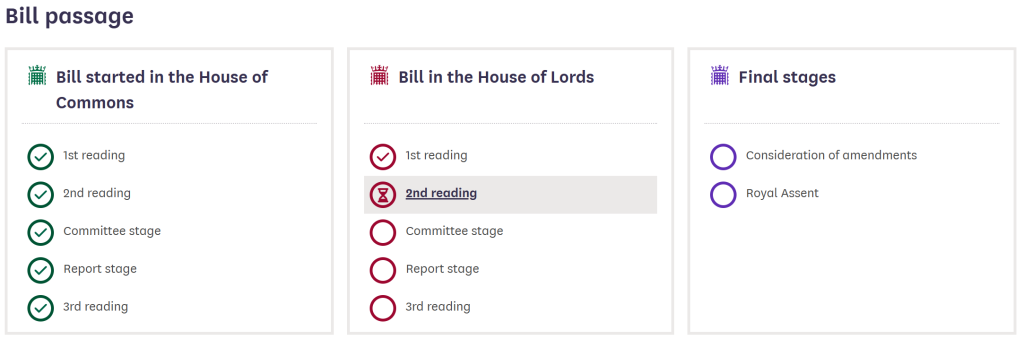
The Tobacco & Vapes Bill (HL Bill 89) passed through the House of Commons in a 366-41 vote at the latest reading. The Bill will be debated in the House of Lords on April 23, 2025.
The Bill will prohibit the sale of tobacco to people born on or after 1 January 2009. It also contains provisions on the licensing of retail sales, registration of retailers, advertising & promotion of nicotine products and smoke/vape-free places.
The Industry offered support for the measures like retailer licensing scheme for nicotine products, vape tax and vending machine ban. However, generational tobacco ban, point-of-sale display ban and lack of measures to address the illicit tobacco trade were criticised.
Download the Tobacco & Vapes Bill.
November 2024: The UK Government is set to introduce the Tobacco and Vapes Bill in the Parliament
Tobacco and Vapes Bill will be introduced in the UK Parliament on November 5, 2024. The Bill will provide new powers to the Government
– to create the first smokefree generation (i.e. phasing-out the sale of tobacco products across the UK to anyone aged 15 or younger this year)
– to extend indoor smoking ban to certain outdoor settings, such as children’s playgrounds, outside schools and hospitals (Note: Hospitality settings, including outside areas of pubs and bars, will not be included in the proposed extension to the indoor smoking ban in England)
– to ban vape advertising and sponsorship
– to restrict the flavours, display and packaging of all types of vapes as well as other nicotine products.
Noting that 25% of 11 to 15-year-olds having tried vaping in 2023, the UK Government aims tougher action to crack down on youth vaping; subject to consultation, the Government is considering to extend smoke-free environment restrictions to include vaping, especially in areas where children and young adults are present. The UK Government already announced that disposable vapes will be banned from June 1, 2025 (- see below for further details).
The Bill will also include powers to introduce a licensing scheme for retailers to sell tobacco, vape and nicotine products in England, Wales and Northern Ireland, and will introduce on the spot fines of £200 to retailers found to be selling these products to people underage. These measures seeks to protect law abiding businesses and tackle illicit products from being sold.
October 2024: England will ban sale and supply of single-use (disposable) vapes from June 1, 2025
New legislation to ban the sale of single-use vapes from June 1, 2025 is laid in the UK Parliament. The Government states that the public is in favour of the ban with 69% of consultation respondents supporting the proposals in February 2024. The ban aims to curb the rise in youth taking up vaping and to protect the environment from a tide of litter.
Protection of the youth: Vape usage grew by more than 400% between 2012 and 2023, with 9.1% of the British public now vaping. More worryingly, a quarter of 11-15-year-olds vape with the disposables being the product of choice for the majority.
Protection of the environment: Single-use vapes are not rechargeable or refillable, and are typically discarded as general waste in a bin or littered, rather than recycled – contributing to a flood of litter on the streets. Even when they are sent to recycling facilities, they usually have to be disassembled by hand – a slow and difficult process which will struggle to keep up with the pace of vape production. Their lithium-ion batteries can also present a fire risk to waste industry workers. Last year, it was estimated that almost five million single-use vapes were either littered or thrown away in general waste every week in the UK, almost four times as much as the previous year. In 2022, more than 40 tonnes of lithium from single-use vapes was discarded.
The UK Government presents the ban as a step on the road to a circular economy, where resources are used for longer, waste is reduced and the path to net-zero is accelerated. Moreover, the Government re-iterates its determination to introduce the Tobacco and Vapes Bill to pave the way for a smoke-free UK.
Wales already confirmed that disposable vapes will be banned from June 2025 in line with England. Scotland and Northern Ireland are also expected to follow suit.
August 2024: The BMA urges the Government to tackle the growing vaping epidemic
The British Medical Association (BMA) calls on the Government to stop the “growing epidemic of vape use in the UK. BMA notes that vape use among children and young people increasing almost six-fold in the last decade – from 1.3% of 11-17 year olds vaping regularly or occasionally in 2014 to 7.6% vaping now (i.e. in the same period, % of adults using vapes increased from 4.2% to 11%). Widespread availability of disposable vapes is noted as one of the most dominant factors influencing this rise.
Underlining the lack of progress in the introduction of the new Tobacco and Vapes Bill, BMA sets out a blueprint to tackle rising vape use, especially among children and young people. BMA’s recommendations are:
1. Ban the manufacture and commercial sale of all disposable vapes, on the grounds of disproportionate and harmful use by children and young people and their adverse impact on the environment
2. Ban all non-tobacco vape flavours
3. Prohibit the use of all imagery, coloring and branding for both the packaging and vape device
4. Reduce visibility of vapes through further restrictions on all advertising and marketing; and ensure vapes are kept behind the counter and not on display in shops and retail outlets
5. Tackle the illegal sales of vapes by accompanying tighter regulations with:
– The requirement for manufacturers to provide clear product information
– Government funded and delivered education campaigns for retailers on products, details of regulation and consequences of non-compliance and for the public on the dangers of vapes to reduce appeal
– Increased and adequate resources, funding and powers for regulating bodies such as Trading Standards and Border Force to enable regular and consistent monitoring and enforcement
– An increase in the limits of fines and sanctions that regulatory bodies can issue
6. Implement tighter regulation and restrictions for related nicotine products, such as nicotine pouches to prevent their availability and marketing towards children and young people. This should include age of sale restrictions, plain packaging, clear product contents information and restricted point of sale displays.
BMA recognizes the role of vapes in helping smokers to quit smoking while reminding that vaping is a less dangerous, but not a risk-free, alternative (i.e. vaping can lead to nicotine addiction, with nicotine having the potential to cause health problems such as high blood pressure and increased risk of COPD).
January 2024: UK Moves to Ban Disposable Vapes as Part of Broader Youth Protection Strategy
The UK Government announced a comprehensive package of measures aimed at curbing the rise in youth vaping, headlined by a planned ban on disposable e-cigarettes3. The initiative follows a sharp increase in underage vaping, with recent data indicating that the number of children using e-cigarettes has tripled over the past three years. Disposable products, in particular, have been identified as a key driver, with usage among 11–17-year-olds rising nine-fold in just two years.
The proposed ban forms part of the government’s response to its October 2023 consultation on smoking and vaping. Alongside this measure, new regulatory powers will be introduced to restrict flavours deemed appealing to younger users and to mandate plainer, less visually attractive packaging. The government also intends to tighten controls on in-store displays, reducing the visibility and accessibility of vaping products.
Enforcement will be strengthened to address underage sales. Retailers in England and Wales found selling vapes illegally to minors will face new financial penalties, while Trading Standards officers will gain authority to issue on-the-spot fines. These measures build on existing powers that allow local authorities to impose fines of up to £2,500.
The vaping reforms sit within a broader public health agenda. The government reaffirmed its commitment to creating a “smoke-free generation,” including proposed legislation to prohibit the sale of tobacco products to individuals born on or after 1 January 2009. To support implementation, £30 million in annual funding will be allocated to enforcement bodies such as Border Force, HM Revenue and Customs, and Trading Standards. The funding is intended to strengthen compliance, enhance enforcement capacity, and reduce opportunities for illicit trade.
January 2024: UK Signals Imminent Disposable Vape Ban Amid Broader Youth Vaping Crackdown
UK media reports indicate that the UK Government is preparing to announce a ban on disposable e-cigarettes within days, as part of a wider effort to address rising youth vaping. The anticipated policy package is expected to extend beyond disposables, incorporating tighter restrictions on flavours and marketing practices, the introduction of a retail licensing regime, and the potential rollout of an excise tax on vaping products. It is also suggested that permissible flavours could be narrowed to a limited set – tobacco, mint, menthol, and fruit.
The proposed measures are rooted in growing concern over underage usage. Data from Action on Smoking and Health (ASH) showed that more than 20% of children aged 11–17 had tried vaping by 2023, up from approximately 14% in 2020. The increase has been driven largely by disposable devices, with Elf Bar emerging as the most widely used product among young consumers. Additional survey data points to a rise in current e-cigarette use within this age group, from 7.7% in 2022 to 11.6% in 2023.
Market dynamics underscore the scale of the issue. In the traditional retail channel, disposable vapes account for approximately 83% of category sales, reflecting rapid growth since the introduction of Elf Bar in 2021. The UK remains the world’s second-largest e-cigarette market, with an estimated 4.7 million adult users, including around 3 million exclusive vapers and 1.7 million dual users who also consume combustible tobacco.
December 2023: Diverging Industry and Global Health Views Shape UK Vaping Policy Debate
Leading industry players and global health authorities have set out contrasting visions for the future of vaping regulation in the UK, as policymakers consult on new measures under the proposed Tobacco and Vapes Bill.
Imperial Brands has called for a targeted regulatory approach focused on limiting youth access while preserving vaping as an alternative for adult smokers. Its proposals include banning marketing practices explicitly aimed at underage consumers, reforming flavour naming, and restricting packaging designed to appeal to minors. The company also advocates stronger enforcement against illicit trade, including the introduction of Fixed Penalty Notices and a retailer licensing scheme, alongside an excise duty on vaping products. However, Imperial opposes both a generational tobacco ban and an outright prohibition of disposable vapes.
British American Tobacco (BAT) has outlined a similar but more detailed framework for tightening regulation while maintaining harm reduction pathways. It supports prohibiting youth-oriented marketing elements – such as cartoon imagery, toy-related branding, and dessert or soft drink flavours – while recognising the role of fruit and menthol flavours in encouraging adult smokers to switch. BAT also proposes a licensing regime for vape retailers, mandatory testing for all products entering the UK market, and design changes – such as removable batteries in disposable devices – to improve recyclability.
Ahead of the consultation deadline in early December, BAT launched a multi-channel media campaign promoting these measures, positioning them as a balanced approach to reducing youth uptake, strengthening compliance, and addressing environmental concerns.
In contrast, the World Health Organization (WHO) has urged governments to adopt a significantly stricter stance. It recommends regulating e-cigarettes in line with traditional tobacco products, including banning all flavours – menthol included – introducing taxation, and extending smoke-free laws to cover vaping in public places.
October 2023: UK Launches Consultation on “Smoke-Free Generation” and Youth Vaping Controls
The UK Government set out the next steps in its ambition to create a “smoke-free generation,” launching an eight-week public consultation on a broad package of tobacco and vaping reforms4,5. The initiative follows the Prime Minister’s announcement of plans to progressively phase out cigarette access for younger cohorts, alongside growing concern over the sharp rise in youth vaping.
The consultation covers a wide range of proposed measures targeting both tobacco and next-generation nicotine products. Central to the plan is the introduction of a “generational tobacco ban,” which would make it illegal to sell tobacco products to anyone born on or after 1 January 2009.
In parallel, the government proposed tighter regulation of e-cigarettes to reduce their appeal to underage users. These measures include restricting youth-oriented flavours, product descriptions, packaging, and overall presentation, as well as introducing controls on how vaping products are displayed in retail settings. The consultation also considers potential restrictions on disposable e-cigarettes, which have been closely linked to rising youth uptake.
Beyond nicotine containing e-cigarettes, the government is exploring whether additional rules are needed for non-nicotine e-cigarettes and nicotine pouches. It is also assessing the potential role of pricing measures – such as increasing the cost of vaping products – in deterring underage use. To strengthen enforcement, the proposals include granting local authorities new powers to issue fines for breaches of age-of-sale laws covering both tobacco and vaping products. Together, these measures reflect a more comprehensive regulatory approach aimed at curbing youth access while advancing the UK’s long-term public health objectives.
References:
- https://www.gov.uk/government/publications/introduction-of-vaping-duty-stamps-scheme-on-1-october-2026/vaping-duty-stamps-scheme-information ↩︎
- https://www.gov.uk/government/calls-for-evidence/tobacco-and-vapes-evidence-to-support-legislation/tobacco-and-vapes-evidence-to-support-legislation ↩︎
- https://www.gov.uk/government/news/disposable-vapes-banned-to-protect-childrens-health ↩︎
- https://www.gov.uk/government/news/government-sets-out-next-steps-to-create-smokefree-generation ↩︎
- Government drive to phase out smoking and tackle youth vaping attracts large response – (www.gov.uk) ↩︎

