


February 2026: South Korea’s Nicotine Pouch Challenge
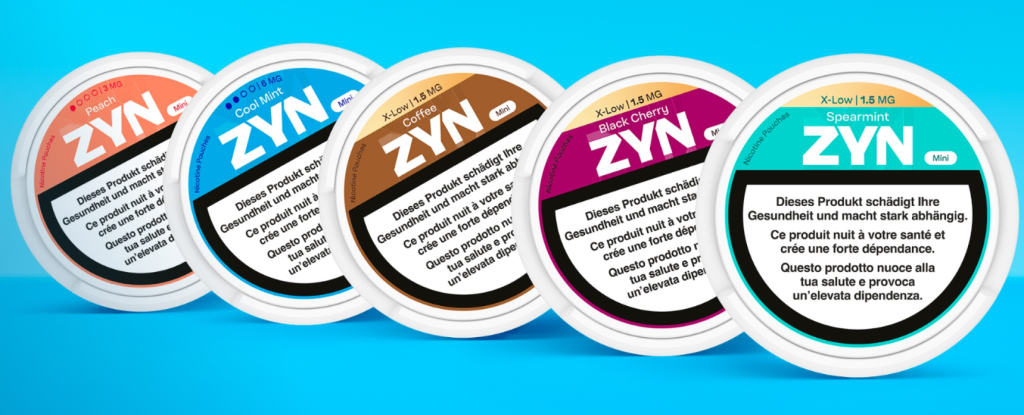
Despite the rapid global growth of nicotine pouches – driven by brands such as ZYN from Philip Morris International and VELO from British American Tobacco – the category remains largely absent from mainstream retail in South Korea. Beyond limited cross-border e-commerce listings and small-scale “direct purchase” channels, nicotine pouches are not meaningfully visible in convenience stores or other established tobacco outlets across the country.
The limited market presence reflects a combination of regulatory uncertainty and an unusually burdensome tax structure. Until recently, South Korea’s legal framework did not clearly classify synthetic nicotine products under the Tobacco Business Act. Because certain nicotine pouches use nicotine that is not extracted directly from tobacco leaves, they operated in a regulatory grey area and were not formally defined as tobacco products. While this created limited room for imports and online sales, it also deterred large-scale commercial investment due to legal ambiguity.
That gap will close on April 24, 2026, when amendments to the Tobacco Business Act come into force. Under the revised regime, all nicotine-containing products – regardless of whether the nicotine is tobacco-derived or synthetic – will be regulated in the same manner as conventional cigarettes. Licensing requirements, health warnings, retail controls, and taxation will apply uniformly. The reform aligns South Korea with a broader international trend in which regulators have moved to eliminate synthetic nicotine loopholes and harmonize oversight across product categories.
However, regulatory clarity does not resolve the central commercial constraint: price. South Korea applies a weight-based excise system to nicotine pouches rather than taxing them per unit. Based on 2026 estimates, the effective tax burden is approximately ₩1,273.5 per gram. For a standard 10-gram can, the tax alone would total around ₩12,700. After factoring in import costs, distribution margins, and retail markups, the likely consumer price range would be ₩15,000 to ₩18,000 per can.
By comparison, a pack of conventional cigarettes retails for approximately ₩4,500. This implies that nicotine pouches would be priced at close to four times the cost of cigarettes, creating a substantial barrier in a market that remains highly price-sensitive. Although the government has introduced a temporary measure allowing for a 50% reduction in applicable taxes during the first two years following implementation of the amended law – potentially lowering retail prices to around ₩10,000 per can – the category would still command a significant premium over combustibles.
In this context, South Korea represents a structurally difficult entry market for multinational nicotine companies. While regulatory alignment from 2026 provides legal certainty, the prevailing weight-based taxation model significantly constrains competitive positioning. Absent a more favorable tax structure or a pronounced shift in consumer willingness to pay for smoke-free formats, nicotine pouches are likely to remain a niche offering rather than a material challenger to traditional cigarettes in the near to medium term.

