


How many cigarettes in a pack?
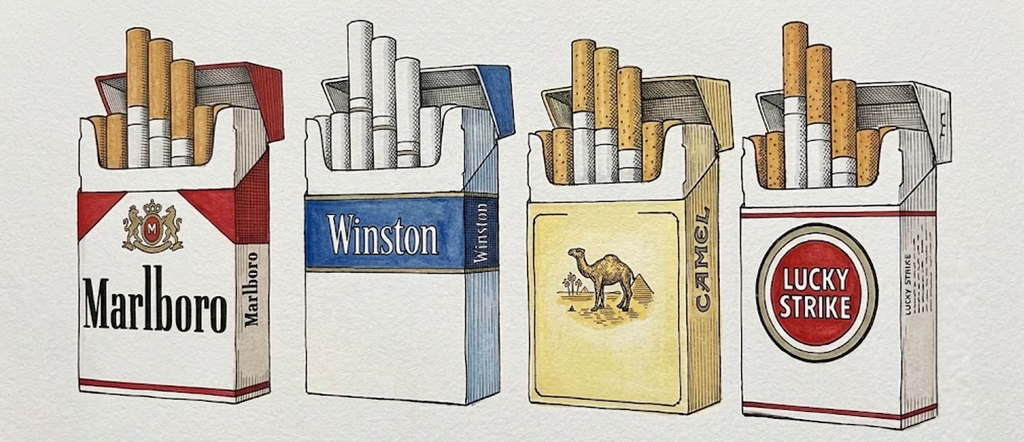
Cigarette packaging varies globally, with pack sizes influenced by regional regulations, consumer preferences, and marketing strategies. Understanding these variations provides insight into smoking behaviors and public health implications. Most commonly, there are 20 cigarettes in a pack. However, there are a few examples of less common pack sizes in use:
– 10-cigarette packs: These smaller packs are often used for promotional purposes or marketed to causal smokers.
– 25-30-50 cigarette packs: These larger packs appeal to heavy smokers seeking cost savings on per cigarette basis and can be found in Australia and Canada, where the cigarette prices are among the highest in the world.
Regulation is the most important factors influencing the cigarette pack size. Governments may mandate a minumum pack size to limit product trial and affordability (i.e. by setting a lower limit on the out-of-pocket money) in an attempt to control consumption and promote public health. Consumer preferences and smoking habits (e.g. average number of cigarettes smoked per day) may also drive the availability of various pack sizes. In the absence of a spefic pack size regulation, economic considerations, such as production costs and pricing strategies, could be in effect. Larger packs might offer cost savings to consumers, while smaller packs provide a lower-cost option for occasional smokers and facilitate product trial.
Standard cigarette pack sizes around the World
| Country/Region | Size | Variation | Regulation |
| United States | 20 | — | Federal regulations require a minimum pack size of 20 cigarettes |
| European Union | 20 | 19-21 | The EU mandates that cigarette packs contain a minimum of 20 cigarettes to discourage affordability and reduce consumption. Many countries adhere to the 20-cigarette pack standard. However, variations do exist |
| United Kingdom | 20 | — | Packs containing fewer than 20 cigarettes are prohibited in 2017 |
| Canada | 20-25 | — | — |
| Australia | 20-25 | 30-50 | Packs containing fewer than 20 cigarettes are prohibited |
| Japan | 20 | 10 | — |
| India | 10 | 12-16-20 | Regulation to mandate larger pack sizes in consideration |
| China | 20 | 10-16-25 | — |
| Russia | 20 | 25 | — |
| Brazil | 20 | — | Packs containing fewer than 20 cigarettes are prohibited |
| South Africa | 20 | — | Packs containing fewer than 20 cigarettes are prohibited |
| Turkey | 20 | — | Packs containing fewer than 20 cigarettes are prohibited |
| Thailand | 20 | — | Packs containing fewer than 20 cigarettes are prohibited |
Although 20-cigarette pack is pretty common across the world, dimensions of a 20-pack may vary widely due to the cigarette dimesions. According to the US Centers for Disease Control and Prevention (CDC), cigarettes can be categorized in four based on their lengths:
– Regular unfiltered cigarette: 68 mm to 70 mm
– King-size filtered cigarette: 79 mm to 88 mm
– Filtered longs: 94 mm to 101 mm
– Extra-long cigarettes: 110 mm to 121mm
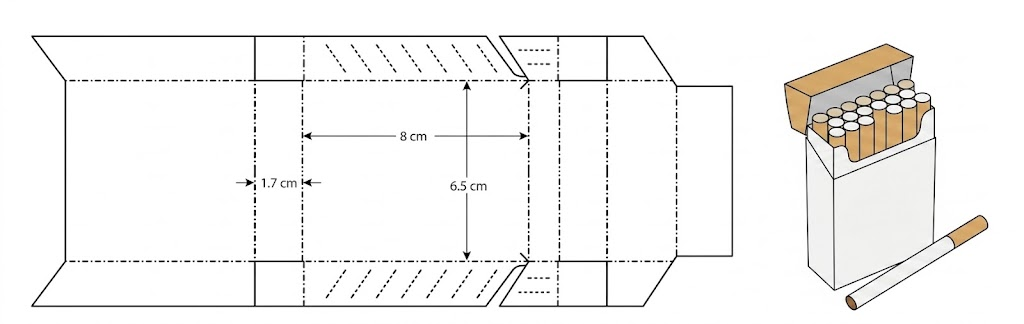
In addition, regular cigarettes have a diameter of 7.5 mm to 8.0 mm while slim cigarettes have a diameter of 5 or 6 mm. Due to their cigarette size variation, dimensions of the cigarette packs vary. Similarly, dimensions of a carton of cigarettes vary with the pack size. A carton of cigarettes typically contains 10 packs, each with 20 cigarettes, amounting to 200 cigarettes per carton. This is the standard configuration in many countries, including the United States, Canada, and the European Union. Although 10-pack carton is the norm, larger 20-pack cartons and smaller 5-pack cartons also exist. In any case, dimensions of the cardborard packaging for a cigarette pack and cigarette carton is driven by the cigarette stick size and the number of sticks packed.
Impact of Pack Size on Consumption
The relationship between cigarette pack size and consumption has been the subject of various studies:
– Larger Packs and Increased Consumption: Observational evidence suggests that larger pack sizes may lead to higher daily cigarette consumption. A study conducted in Canada found that smokers using 25-cigarette packs consumed 2-3 more cigarettes per day than those using 20-cigarette packs. Additionally, research from Australia indicated that smokers purchasing 30-cigarette packs tended to smoke at least 15% more cigarettes per month compared to those who bought standard 20-cigarette packs.
– Smaller Packs as a Consumption Control: Some smokers perceive smaller packs as a means to keep their smoking habit under control. By purchasing fewer cigarettes at a time, they may limit their consumption, aligning with long-term goals to reduce or quit smoking. Studies have shown that smokers who switched from 25-cigarette packs to 20-cigarette packs reduced their daily consumption by an average of 10%.
– Regulatory Measures: In England, the introduction of minimum pack sizes did not lead to a significant change in mean daily cigarette consumption, with studies showing only a marginal 1-2% decrease in cigarette sales following the regulation. However, in Brazil and Thailand, where pack size regulations were accompanied by higher taxes and plain packaging laws, overall smoking rates decreased by approximately 5% within the first two years of implementation.
– Psychological Impact of Larger Packs: Research has suggested that consumers who purchase larger packs may underestimate their consumption and thus smoke more than intended. In a study conducted in Japan, smokers with access to 10-cigarette packs were more likely to reduce their daily smoking than those buying 20-cigarette packs, who were more likely to finish the entire pack within a day.
Cigarette pack sizes are shaped by a complex interplay of regulation, market demand, and economic factors. While the standard pack of 20 cigarettes is common, variations exist to meet diverse consumer needs. The impact of pack size on consumption is nuanced; larger packs may encourage increased smoking, while smaller packs could aid in consumption control for some individuals. However, evidence is mixed, and further research is needed to fully understand these dynamics. Policymakers must consider these factors when designing interventions aimed at reducing smoking rates and improving public health outcomes.

