


Based in Copenhagen, Denmark, Scandinavian Tobacco Group (STG) is a leading manufacturer of cigars and smoking tobacco. The Company is the market leader in handmade cigars in the US, in machine-rolled cigars in the US and Europe, and in pipe tobacco in Europe. As a first & foremost cigar company, STG has the vision to become the undisputed, global leader in cigars. Nevertheless, on the Next Generation Products side, STG has made good inroads into the highly-competitive Sweden and fast-growing UK nicotine pouch markets with its XQS brand. We met with Niels Frederiksen, CEO of Scandinavian Tobacco Group to hear more about the STG’s plans, the cigar category and XQS brand.
Tobacco Insider: Thank you very much for the opportunity to discuss Scandinavian Tobacco Group (STG), the cigar category and fast-growing XQS nicotine pouches, Niels. Let me start with a high-level question; Tobacco Industry is going through a turbulent but exciting transformation from traditional products to new nicotine products, or Next Generation Products. Some tobacco companies are All-in. Others believe that there is a lot of money that can still be made in the traditional business. How do you read this transformation and where does STG fall within the spectrum? What is STG’s strategy around this transformation?
Niels Frederiksen: Thank you for inviting me for the interview. We appreciate the interest. I think it’s important to emphasize that, for Scandinavian Tobacco Group, we consider ourselves first and foremost a cigar business. At the end of the day, our vision is to become the undisputed and sustainable global leader in cigars. This means that cigars are core to our business; but we also own a very large pipe tobacco business, and we have multiple businesses within the fine-cut category. Cigars are the backbone of our company, and we continue to see growth opportunities within this space.
If you think about the Next Generation Products (NGPs) and the transformation the industry has been undergoing, I think 5-6 years ago we did not really believe that it was meaningful for us to compete in this category. But as the years have gone by, we have seen a lot of interest from third parties coming to us, trying to distribute NGPs through our established network; which has made us ask the question; ”Is it right not to be present in NGPs?”.
Today we are of the view that although it is possible for us to pursue a strategy entirely based on cigars and pipe tobacco, we can become a stronger company if we are also successful in NGPs. I think one of the trigger points for us was that we have a large machine-rolled cigar business. All consumers in this category have come from cigarettes. When the number of cigarette smokers goes down, then there is also a risk to machine-rolled cigars. In many countries we can see that cigarette sales are declining and, as a result, machine-rolled cigars can go one of two ways: they decline or potentially they decline faster than today if consumers do not come into the category. But they can also emerge as the alternative product for those who seek a combustible product, for the combustible part of their tobacco assortment. We are watching carefully to understand what happens.
It is the potential risk to our machine-rolled cigar business that has brought us into NGPs. I think very few in the industry can be active across all NGP categories and we have chosen nicotine pouches as the area to focus on. However, even if we build a meaningful business in nicotine pouches, the bulk of our earnings, in five or seven years from now, will still be from the cigar business – where we continue to grow and where we also think that we have more opportunities in the future. But we think that nicotine pouches can be a nice complementary business to us.

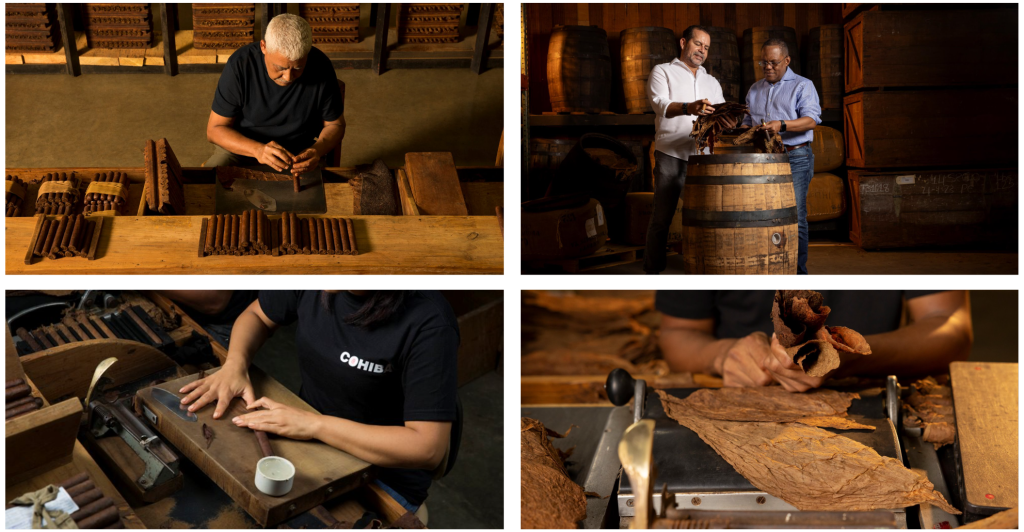
Tobacco Insider: Thank you, Niels for the explanation. Now you mentioned that STG is first and foremost a cigar company and your ambition is to become the undisputed global leader in the cigar category. The category is not necessarily very well understood by the people outside the industry. We can broadly talk about two categories: handmade cigars and machine-made cigars. In a nutshell the handmade ones are seen as an occasional luxury product and machine-made ones are seen as a competitor to cigarettes – thereby, sharing the same type of dynamics as the cigarettes. So for educational purposes, could you explain the market and consumer dynamics that you observe for these two categories. What are the differences and how STG is planning to win in these two categories?
Niels Frederiksen: We see the handmade cigar category as distinctly different from the machine-rolled cigar category. We actually don’t consider the handmade cigar category as a luxury category and the reason for this is that the main market remains the U.S. which is almost 2/3 of global consumption of handmade cigars. In the US handmade cigars spans across many social classes and from that perspective you can say that we don’t consider it a luxury product. But it is correct that when you look at some of the handmade cigar brands like Cohiba, which we own in the US only, this is a very strong brand and can command very high prices. I think that many people would consider a $100 Cohiba cigar as a luxury product and we understand that. However, we think of handmade cigars as an “affordable luxury product” where you can choose to spend maybe $5 per cigar one day and then the other day you are willing to reward yourself with a $20 cigar and it still kind of feels like a luxury, you’re giving to yourself.
I think it is important to remember that most of the handmade consumption is really occasion driven and the simple fact that it takes, 30 to 45 minutes to smoke a handmade cigar requires planning. The occasion can be at home, or it can be outside. But it is more of an occasion driven event. Whether that be a celebration, or a personal reward or a special time with friends in a friendly environment where you smoke together with other people.

Tobacco Insider: It can be gift.
Niels Frederiksen: Exactly, it can even be a gift for many people. Father’s Day in the U.S. is the single biggest day of cigar sales. Gift giving is an important element to the category. I also think what is a little different for handmade cigars is that we often think about our consumers as quite curios. A handmade cigar smoker will not just have one brand that they use every time. They may have a preferred brand, but often they will have two to three different brands that they switch between. They are very happy to try something new out that somebody recommends to them. It’s a little bit like if you chase a good bottle of wine or a new bourbon or rum, you recommend others to try. It’s the same with tobacco from a certain region – people will recommend it to others. And that’s also part of the social aspect, which I always find is hugely important for handmade cigars.
Then let me maybe mention the last thing which I always think people forget; most people that smoke a handmade cigar, do not smoke other tobacco products. They don’t start with cigarettes and work their way into handmade cigars nor is it the nicotine craving that makes you light up a handmade cigar. Most of the people that come into the category are actually introduced to the category by a friend that takes them by the hand, brings them down to a store and kind of says: Is this something for you? And for some people it is and for others it’s not. But it is a category that we consider a little bit distinct from other tobacco categories.
If we then turn to the machine-rolled cigars, you are right that it has characteristics that are closer to cigarettes; but exists in many different formats. Some of the formats are as small as cigarettes, but there are also larger machine-rolled cigars. Machine-rolled cigars are often referred to as “dry cigars” in the sense that they don’t require humidification in the same way as the handmade ones.
All machine-rolled cigar smokers come from cigarettes and that is why, we also typically have an older age profile as at some point in time, they don’t want to smoke cigarettes anymore, but still enjoy smoking, so they will switch to cigars because they feel a higher element of control with their consumption. It typically takes a little longer to smoke a machine-rolled cigars and it becomes a little more about a daily ritual or multiple daily rituals where you sit down, have a cup of coffee and smoke a cigar. This means you can say that it’s different from cigarettes, but based on the shared history, because most machine-made cigar smokers simply come from cigarettes, it means that, unlike the handmade cigar smoker, they typically go with one brand. They will have a preferred brand and will smoke that brand on a daily basis, but they will smoke less than if they were smoking cigarettes. And again, I still find that sometimes we underestimate some of these psychological motivations because, everyone knows that, if you make the conscious choice to smoke with the associated risk, the control element is really important. For many cigar smokers, cigars work well in controlling the consumed amount.
Tobacco Insider: Any comments on how STG plans to win in these two categories?
Niels Frederiksen: As we are already a significant player in both cigar segments, we are mostly occupied with building stronger brands, but also a stronger brand portfolio altogether. Often the success in these categories is about having a good proposition in each meaningful segment – let it be a machine-rolled with a filter, let it be a flavoured cigar or, in handmade, there are different price categories.
We actually think that our job is to consolidate the industry to strengthen our portfolio of brands, but also to keep trying to build a better and better smoking experience. This rings especially true for the handmade cigars. It’s important where the tobacco is grown and who has blended the cigar. It is important even how we treat the tobacco once we take it off the plant and so on. We build expertise throughout the value chain. And how do we win? One of the ways we win is by building the strongest portfolio by strengthening the market platforms. Whether that be being available in more markets, being able to engage with retailers and so on. 90% of cigar smoking takes place in North America and Europe which means these are also the markets where we have our own salesforce and have strong trade relationships. I think winning for us is about having a strong starting point but also being the company willing to acquire and build even stronger brand portfolios over time.
Tobacco Insider: Let’s move a bit into the general industrial dynamics. Multi-usage, dual-usage, poly-usage are the new trendy terms in the tobacco industry. It refers to the to the fact that consumers are increasingly using a portfolio of nicotine products – in many cases a combination of a traditional tobacco product and a new nicotine product. What’s your take on this consumer trend and do you observe the same trend in your own portfolio of products?
Niels Frederiksen: We certainly see the trend. We also get the feedback when we talk to our consumers that they are increasingly dual users or multi users of different categories. The only area where this doesn’t really apply is handmade cigars. Again, as we talked about it before, handmade cigar consumption is not nicotine driven and there is less of a need for poly use. But for all other categories, I think we are exposed to poly use and we can see that our consumers extend their repertoire of products they use. When we think about it and talk about it, I think regulation is one important driver as it becomes more difficult to be a regular smoker. More places have banned smoking and some of the other products are easier to use. Then, there’s a general health aspect and the availability [of NGPs] has exploded. I mean it’s not a secret that there’s a heat-not-burn product out there or vape alternatives, so for the consumer, there are a lot of alternatives, and you can fit them quite easily into your daily life. We certainly think that poly use is here to stay with the exception of handmade cigars.
I’m also finding it very difficult to project what this will mean going forward. Just take a look at Europe, where the legislation or the regulatory environment is not even the same for all the next generation products that exist. For the consumers in some countries, there’s availability of certain products, but not of others. And this makes it difficult to project how the market will be 5-10 years from now. Hence, the question that most of us think about is: What is our role in the category and where should we? Where should we play?
Nicotine pouches are still a very small part of our business, but we are much more prepared now for what can and cannot happen. We monitor the development in different alternatives and we gain experience with our own presence in nicotine pouches. For us, it’s not about cigars not being smoked. We don’t believe in that, but it is about acknowledging that consumers will be looking for different alternatives. Myself, I smoke; but I actually don’t consume many of the next generation products because I still don’t find them to be a really good alternative. So, I think that the category will continue to evolve and the alternatives that exist today are already better versions of what they were back in 2010. It’s an exciting trend for the industry. It is also a difficult trend, especially for those of us who do not see it as a main business because we still see it as a complementary opportunity rather than a core business.

Tobacco Insider: Thank you, Niels. Shall we talk a bit about money? Scandinavian Tobacco mainly operates in the U.S. and Europe as 90% of the [cigar] business is there. And for a company that operates in this territory, investors are very much used to EBITA margins like 40% to 60%. The reported margin from STG is in the low to mid 20s. Of course, you have a [low-margin] distribution business, but you also are selling an affordable luxury product with high margins. Could you explain what drives your EBITDA margin and why it is, on the surface, lower than what investors are typically used to?
Niels Frederiksen: It’s a question we were often asked back in 2016 when we became a listed company. I think it could be difficult to understand and, therefore, I’m glad to have the opportunity to explain some of the drivers. We have quite a lot of businesses that have a 50% margin, but not all of our businesses are like that. You mentioned one of the examples; we have a pretty large online business that just operates at a different margin. We also have quite a meaningful contract manufacturing business that also operates at lower margins. And then it’s important to remember that we are a niche tobacco product company and all our products have a higher element of labour from the extreme example of a handmade cigar, which is labour intensive from the start to the end, to then the other end of our scale which is machine-rolled cigars that still require more labour intensive parts in the value chain. We also produce at a much, much lower speed than cigarettes when we make a machine-rolled cigar. We can never have a production cost that is anywhere near what it costs to produce a cigarette – which is extremely inexpensive to produce, especially at highly automated facilities that exist.

So that’s one thing: our cost are simply higher. Then, you can argue why don’t we just charge higher prices. The main reason is that we still have to be reasonably priced compared to the alternatives. Cigarettes have one big advantage – it’s the most heavily excised product in the tobacco market – which means that if you have a product that has 75% excise tax, then you take a large price increase on the 25% cost price, it doesn’t actually hit the consumer price with the same impact. We also have excise for our tobacco products, but it’s significantly less because otherwise our products would be so expensive that we could not sell them. We say that the larger the “excise shield”, the easier it is to take higher price increases and cigarettes have by far the largest excise shield
We still think we make decent margins. They’re not as high as some of the competitors. When Swedish Match was acquired, I think people were also very surprised on the multiple paid. But when you then take a deeper look at it, the margin that they were able to generate on snus and nicotine pouches, it shows that some of the NGPs have very, very strong margins. We offer investors something different because we are a very strong player in a niche segment. So, we still have the opportunity to consolidate the industry and when you consolidate an industry successfully, you will create scale and you will create better margins over time.
Then, I think that what is becoming increasingly clear is that we can maybe build an interesting and complementary nicotine pouch business with nice margins as well. That’s also kind of a something different to what the big cigarette companies do. We are in the same industry, but we are also a little different. We are still fairly profitable and generate strong cash flow. But we are a little different. That’s maybe the best way to express it.

Tobacco Insider: One of your competitors with a large cigar business noted the steep rise in leaf prices: on the order of 15% per annum. Do you observe the same trend? How do you see your ability to pass on this inflation?
Niels Frederiksen: Yeah, I think in the past three to four years, everyone has seen tobacco prices go up. I mean, part of it is just the underlying inflation – in energy, transportation, labour. We deal with this in two ways. First of all, we also have to pass on some of this cost inflation in the form of price increases to consumers and we have taken higher pricing. Increases over the past three to four years are higher than in the previous years. But the second way we try to manage this is to be good buyers of tobacco. We keep often as much as 24 months of inventory – which also means that if there’s a particular grade of tobacco that has gone up a lot in price, then we try not to buy so much in this particular year and instead wait for the following year because typically the demand and supply for tobacco also evens out a little over time. So, there are different ways you can deal with that, but certainly you can say that we’ve been in a period where not only the cost of tobacco, but many other input factors have gone up and we try to balance it. You cannot price yourself out of the market and if you look at our machine-rolled cigars, we can see that we have been trying to push price increases faster than some of our competitors. We now have to be less ambitious and even reduce some pricing. So it is always difficult, but we are still a firm believer that if something goes up on the input side, it also needs to go up on the finished product.

Tobacco Insider: Let’s talk a bit about the future. For 2025, Scandinavian Tobacco’s guidance is kr.9.2 to kr.9.7 billion on the top-line; that’s going to be a record revenue, including the Mac Baren acquisition. On the profitability side, the guidance is 20 to 23% EBIT margin and kr.11 to kr.14 EPS. Mid-point of 21.5% EBITA margin and kr.12.5 EPS are below the reported numbers in 2024. And honestly, this guidance is perceived as “soft”. Could you explain a bit the drivers of the guidance? And, when we arrive at 2026, as the benefits of Mac Barren acquisition and XQS nicotine pouch growth kick in, can we see a significant improvement on the bottom-line?
Niels Frederiksen: I think that you’re right in saying that our guidance has been perceived on the softer side and, again, this was not a big surprise to us. I think what we have been explaining to investors and which, I think, is still right that we just have more uncertainty, especially around the U.S. consumer sentiment. We have a little more than half of our turnover done in the U.S. so when the U.S. consumer is cautious, we are also cautious. The likelihood of us being in the lower end of the guidance on sales and profit is not high; but we think it’s more prudent to be reflecting what we see on the consumer side. That’s one element of the guidance.
The other element which is also important is that we have been losing market share in some European machine-rolled cigar markets. We’ve been pushing promotional activities harder to protect market share and we want the flexibility to make the right commercial decisions for the long term. Though on the machine-rolled cigar side, we’ve drawn a line in the sand. We don’t want to give away more market share. And if that requires us to be a little bit sharper on pricing, we should be able to do that. We keep trying to say to the investors to keep an eye on the longer term and we think it’s important to keep making investments in both our core business and in our nicotine pouch business. Hence, the guidance ranges are a little wider than we would normally go out with; then, hopefully, as the year evolves, we can be a little bit more precise on the ranges.
There’s so much going on. We are buying businesses, we are growing nicotine pouches, we have a growing online business that operates at lower margins. You also have to look at our absolute earnings levels, not only the margins. When we look forward, that’s at least one of the points that we’re trying to draw more attention to. I keep reminding people, if you look at the size of the company and what we earned 10 years ago compared to where we are today, then you will see that we have grown quite significantly on the top line, and we’ve grown even faster on the bottom line. But it’s also a fact that that we had kind of all-time highs during COVID when people were at home and were able to smoke handmade cigars whenever they pleased. We do make a little less money than we did during COVID, but we certainly make quite a bit more than we did 10 years ago.
Tobacco Insider: So, 2025 is an investment year. Is 2026 dependent on the U.S. consumer and the turnaround in European machine-made cigar business? Or, can we already feel more confident about 2026?
Niels Frederiksen: We are obviously not saying anything about 2026, and we will only guide on that 12 months down the road. But we’ve actually been investing in both 2023 and 2024 and we continue to invest again in 2025. When you look at our profitability and the impact of Mac Baren, it is important to combine 2025 and 2026 together because, we did not buy Mac Barren because it’s a big growth engine, we bought it because it solidifies and consolidates our pipe tobacco and smoking tobacco business. Hence you can say that certain cost savings come out in 2025, but the full value of the integration only materializes in 2026 and even in 2027.
I think a better way of expressing it is that we are very mindful of the fact that as we invest, we also have an obligation to keep driving our cost efficiency. You may know that we are rolling out SAP globally for our IT solution, and that’s also an investment where the benefit will come down the road. It’s always difficult when everyone likes the money today. However, our job is to make sure that there’s also money available tomorrow and the day after and we try to balance those things up against each other.
Link to Scandinavian Tobacco Group: Interview – Part II

Chief Executive Officer (CEO), Scandinavian Tobacco Group: Niels Frederiksen
Niels Frederiksen has held various positions in the Scandinavian Tobacco Group since 1999, including Senior Vice President and Executive Vice President, and became the Group CEO in March 2015. Niels is passionate about the tobacco industry and is an avid cigar enthusiast.
Company Profile: Scandinavian Tobacco Group
Based in Copenhagen, Denmark, Scandinavian Tobacco Group (STG) is a leading manufacturer of cigars and smoking tobacco. As a first & foremost cigar company, STG has the vision of being the undisputed, global leader in cigars. STG’s portfolio contains about 200 leading brands, including the cigar brands Macanudo, La Gloria Cubana, Panter, Signature and La Paz, pipe tobacco brands Captain Black, Erinmore, Borkum Riff and W.Ø. Larsen, and fine-cut tobacco brands Bugler, Break, Escort, Bali Shag and Tiedemanns.
Scandiviavian Tobacco Group employs 10,000 people worldwide and sells its products in around 100 markets. STG has sales offices in North America and Europe. In the US, STG has a market-leading position in handmade cigars and, owns General Cigar and Cigars International. Scandinavian Tobacco Group is a publicly listed company on the Nasdaq Copenhagen.

