


The Humble Origins of a Swedish Giant
The story of Swedish Match begins in the mid-19th century, rooted in a world that still relied heavily on matches for daily living. It was a time when the simple act of lighting a candle or stove was central to the home, and matches were as essential as salt and soap. In 1868, Jönköping Tändsticksfabrik (Jönköping Match Factory) was founded in Sweden, quickly becoming a leader in match production. By the early 20th century, the Swedish match industry had grown so influential that Ivar Kreuger, the infamous “Match King,” built an international empire by monopolizing match production across numerous countries.
Following Kreuger’s death in 1932 and the collapse of his financial empire, the match business underwent restructuring. In 1917, Svenska Tändsticksaktiebolaget (Swedish Match AB) was officially founded, eventually becoming a prominent player not only in matches but also in lighters, tobacco, and related products. Over the decades, the company diversified and evolved, expanding from fire-lighting tools into tobacco products — particularly smokeless tobacco, which would become its defining legacy.

Diversified Portfolio, Unified Purpose
Throughout the 20th century, Swedish Match operated in a range of businesses beyond its original match and lighter products. It dabbled in everything from razors and paper products to pharmaceuticals. However, the company gradually divested many of its unrelated operations and honed in on a specific area of growth: tobacco.
By the 1990s, Swedish Match was increasingly focused on smokeless tobacco products – a category that held less regulatory scrutiny, lower health risks compared to cigarettes, and rising public interest. The company’s experience in snus, a traditional Swedish moist tobacco product, gave it a strategic advantage. Even today, Swedish Match continues to sell matches and lighters under well-known brand names like Solstickan, Cricket, and Fiat Lux, primarily in Europe and Latin America. But these legacy products represent a small portion of the company’s revenue. The true engine of growth lies in smokeless.

The World of Snus: Sweden’s Smokeless Secret
Snus (pronounced “snoose”) is a moist tobacco product placed under the upper lip. It has been used in Sweden for over 200 years and differs from American-style dipping tobacco or chewing tobacco in several key ways: It doesn’t require spitting. It is pasteurized, not fermented, which reduces harmful chemicals. It comes in small pouches (much like tea bags), making it discreet and easy to use.
For decades, snus was a niche, regional product — largely unknown outside Scandinavia. But within Sweden, it became the dominant form of tobacco. In fact, Sweden has one of the lowest smoking rates in Europe, thanks largely to widespread snus use. Public health officials have even pointed to snus as a form of harm reduction, a way to reduce the risks associated with combustible tobacco. Swedish Match developed and marketed several leading snus brands, including General, Göteborgs Rapé, and Catch. These brands not only sustained the company but also provided a foundation for its future innovation.
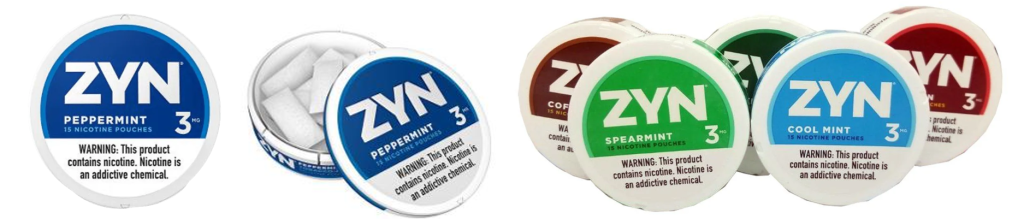
From Snus to ZYN: A Nicotine Revolution
While snus remained a largely regional product, Swedish Match began developing a tobacco-free alternative that would eventually change its fortunes entirely. Enter ZYN — a nicotine pouch that looks and feels like snus but contains no tobacco leaf. Instead, it uses purified nicotine, flavorings, and plant-based fillers. Users place a small white pouch under their upper lip to absorb the nicotine discreetly and smoke-free.
Launched in Sweden in the mid-2010s, ZYN was part of a new wave of modern oral nicotine products, designed to appeal to a global audience interested in alternatives to smoking, vaping, and traditional smokeless tobacco. Unlike snus, which carries a strong taste and cultural baggage, ZYN was neutral, sleek, and easy to adopt — especially in the U.S., where smokeless tobacco had long struggled with negative connotations. The product officially launched in the United States in 2016, initially targeting niche markets like athletes, former smokers, and vapers. But by the late 2010s, ZYN began catching fire. The rise of nicotine pouches was fueled by changing public attitudes toward smoking, a growing interest in harm reduction, and the social acceptability of discreet nicotine consumption.
ZYN’s success in the U.S. was explosive. By 2020, it had become the dominant nicotine pouch brand in the country, outpacing competitors like On! and Velo. It gained favor among users for its clean packaging, wide flavor variety (mint, citrus, coffee, cinnamon), and consistent nicotine delivery. But what truly drove ZYN’s breakout success was its positioning: it wasn’t just another tobacco product – it was a lifestyle product. Sold in gyms, gas stations, convenience stores, and increasingly online, ZYN was marketed as modern, health-conscious, and effective.
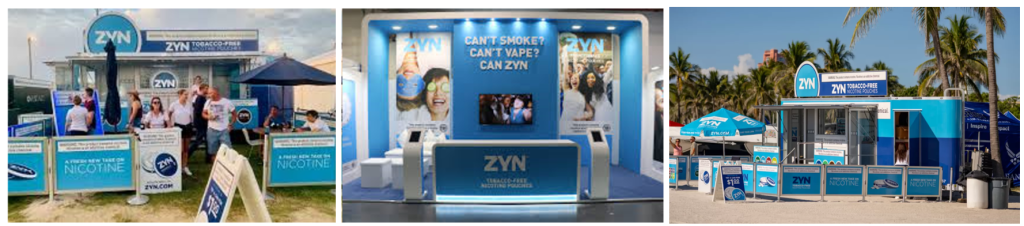
As nicotine pouches became a category of their own, Swedish Match found itself sitting atop a booming market. Between 2019 and 2022, ZYN’s U.S. shipments soared. In 2021 alone, ZYN sold over 173 million cans in the U.S., and the number continued climbing quarter after quarter. Investors took notice. Swedish Match’s stock price surged, hitting all-time highs by early 2022. Its strong financial performance, driven by ZYN, helped offset declines in cigarette and cigar segments and attracted global attention – especially from Big Tobacco players eager to get a foothold in the modern nicotine space. By 2022, Swedish Match was no longer just a Scandinavian tobacco company – it was a global nicotine innovator. The company’s share price had risen over 50% in less than two years, driven almost entirely by ZYN’s explosive U.S. growth and market dominance.
Enter Philip Morris International (PMI) – the Marlboro-maker turned reduced-risk product advocate. PMI had been aggressively investing in alternatives to smoking, including heated tobacco (IQOS), e-cigarettes, and oral nicotine products. It viewed Swedish Match as a perfect match – literally – for its smokeless ambitions. In May 2022, PMI launched a $16 billion takeover bid for Swedish Match, offering SEK 106 per share. After months of negotiation and shareholder debate, the deal was finalized in late 2022, and Swedish Match became a wholly owned subsidiary of PMI. The acquisition gave PMI immediate access to ZYN and its U.S. distribution networks – a strategic goldmine. For Swedish Match, it meant the end of its 100+ year journey as an independent Swedish company. For PMI, it marked a turning point in its shift away from combustible cigarettes.

ZYN Mania and the Public Spotlight
Post-acquisition, ZYN’s momentum only intensified. By 2023 and into 2024, ZYN had become a cultural phenomenon in the U.S., often trending on TikTok and Reddit, frequently sold out in stores, and increasingly the subject of political and regulatory scrutiny. With usage spreading among young adults and former smokers alike, public health watchdogs began raising alarms about youth access, marketing practices, and nicotine addiction. But for PMI and Swedish Match (now integrated), ZYN was a runaway success. It helped PMI achieve its smoke-free product sales targets and significantly bolstered its U.S. presence.
By 2025, ZYN was selling over 600 million cans annually in the U.S., making it one of the fastest-growing consumer products of the decade. Its impact was so large that PMI’s share price – sluggish for more than a decade – experienced its strongest performance in years, driven almost entirely by the ZYN juggernaut.

The End of an Era
For many in Sweden, the PMI acquisition marked a bittersweet moment. Swedish Match, once a national industrial pride symbol, was no longer in Swedish hands. Some worried that the company’s historical and cultural identity would be diluted. Others saw it as the natural evolution of a globalizing market and a validation of Sweden’s unique contributions to tobacco harm reduction. Under PMI’s umbrella, Swedish Match continues to operate largely as an autonomous division. Its Stockholm headquarters remain active, and brands like General and ZYN continue to expand. But the independent era – from matches and lighters to nicotine pouches and Wall Street glory – has ended.
What remains is a legacy of innovation. Swedish Match didn’t just sell tobacco; it reimagined how nicotine could be delivered. It made snus global. It turned a white pouch into a billion-dollar business. And it showed that a 19th-century match company could lead the 21st-century nicotine revolution. Swedish Match’s transformation from a matchstick manufacturer to a leader in smokeless nicotine is one of the most remarkable business evolutions in European history. It combined tradition with innovation, leveraging centuries of expertise in tobacco while embracing new consumer behaviors and scientific advances.
With ZYN, Swedish Match not only pioneered a new product category but also ignited a global shift in nicotine consumption. Today, as part of Philip Morris International, its influence continues to grow — not just as a brand, but as a symbol of how legacy companies can adapt, disrupt, and thrive.
The story of Swedish Match is over in one sense – but its impact is just beginning.

