


Youth Nicotine Use at Historic Low in the U.S. Despite Rise of Disposable E-Cigarettes
The landscape of youth nicotine use in the United States has reached a notable inflection point. According to data from the 2025 National Youth Tobacco Survey (NYTS), the overall prevalence of any tobacco or nicotine product use among middle and high school students declined to 7.5% in 2025, the lowest level recorded since the survey began. This represents a continued downward trend from 8.1% in 2024 and a substantial reduction from the double-digit prevalence levels observed in earlier decades. Use remains more common among high school students, where prevalence stands at 9.7%, compared with 4.4% among middle school students.
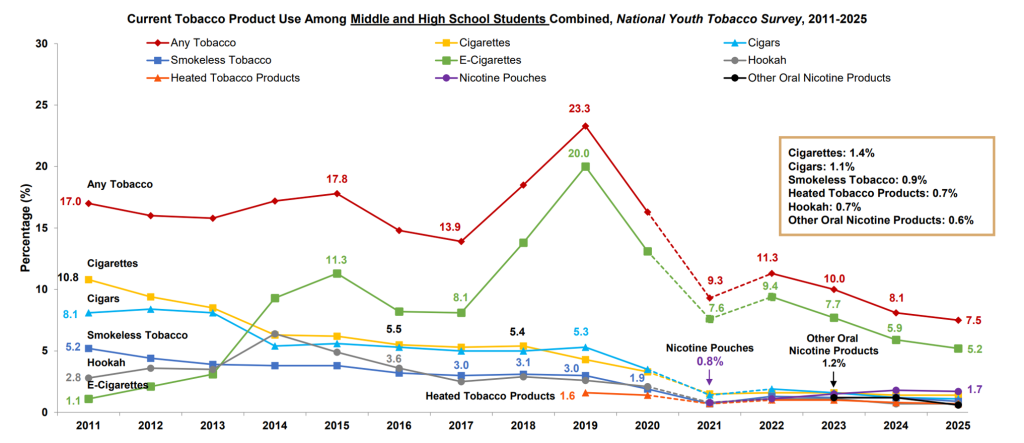
The data also indicate that traditional combustible products now account for a very small share of youth nicotine use. Cigarette smoking among youth has fallen to 1.4%, reflecting a sustained long-term decline. Other traditional tobacco products show similarly low prevalence rates, with cigars at 1.1% and smokeless tobacco at 1.0%. Among currently used products, e-cigarettes remain the most commonly reported, used by 5.2% of middle and high school students, though this figure is down from 5.9% in 2024. Nicotine pouches represent the second most prevalent category, reported by 1.7% of students, also slightly lower than the 1.8% reported in 2024.

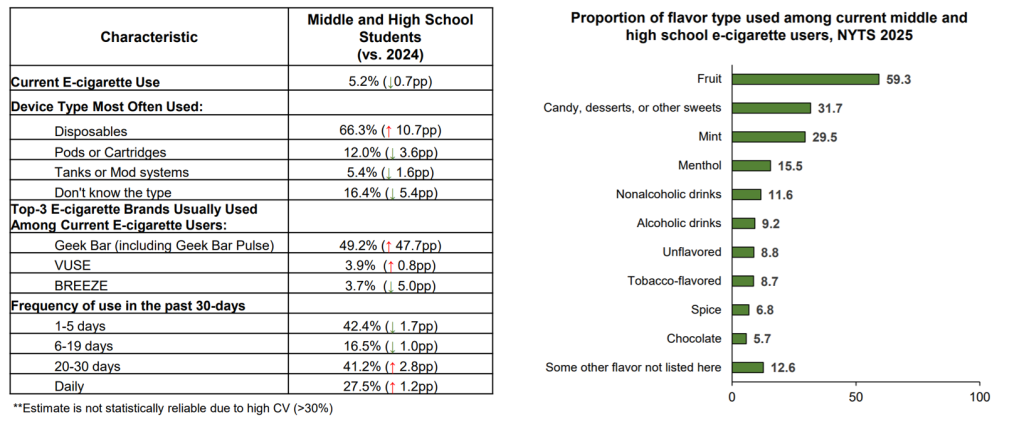
Flavor preferences among youth e-cigarette users continue to skew toward sweet profiles. Fruit flavors account for 59.3% of reported use, followed by candy and dessert flavors at 31.7%. Menthol and tobacco flavors are present but represent a smaller share of reported preferences. A notable development in the 2025 survey is the growing prominence of disposable e-cigarette devices, which are now used by approximately two-thirds of youth e-cigarette users, representing an increase of 10.7 percentage points compared with 2024. The market for these products has also seen significant shifts in brand preference. Geek Bar, including its Pulse product line, was cited as the usual brand by 49.2% of current youth e-cigarette users. In contrast, previously dominant brands such as Vuse and JUUL now account for a substantially smaller share of reported usual use, with JUUL cited by 1.3% of youth users.
In the nicotine pouch category, brand preferences appear more stable. ZYN remains the leading brand, cited as the usual brand by 61.4% of current youth pouch users, maintaining a position similar to that observed in the prior year. Flavor preferences within this category differ from those reported for e-cigarettes: mint flavors account for 59.6% of use, followed by menthol at 18.1%.
Patterns of frequent use vary across product categories. Daily use was reported by 27.5% of youth e-cigarette users, compared with 17.6% among nicotine pouch users. These findings suggest differences in use patterns across product types.
Overall, the 2025 NYTS results indicate that youth nicotine use has continued to decline to historically low levels. At the same time, the data highlight ongoing shifts within the product landscape, particularly the growing presence of disposable e-cigarettes and the continued emergence of non-combustible nicotine products. Continued monitoring will be important to understand how product innovation, market dynamics, and regulatory measures influence youth use patterns in the years ahead.
Download Altria – Analysis of 2025 NYTS

