



May 2026: Korea’s Heated Tobacco Market Heats Up as E-Cigarette Regulations Reshape Competition
Competition in South Korea’s heated tobacco market is intensifying following the recent inclusion of synthetic nicotine e-cigarettes under tobacco regulations. Until recently, synthetic nicotine vaping products had benefited from lighter regulation and lower taxation, giving the category a significant pricing advantage and supporting rapid growth. However, new taxes and regulatory requirements are expected to increase costs, potentially weakening the segment’s competitiveness and prompting some consumers to shift toward heated tobacco products (HTPs).
The changing regulatory landscape is encouraging major tobacco companies to strengthen their positions in anticipation of a broader market reshuffle. South Korea’s heated tobacco market remains heavily concentrated, with KT&G’s Lil and Philip Morris International’s IQOS together accounting for an estimated 90% of the sector. KT&G currently leads the market with a 47.4% share. Against this backdrop, Japan Tobacco (JT) and British American Tobacco (BAT) are accelerating efforts to expand their presence through aggressive marketing, broader retail availability, and enhanced online services.

JT recently launched its new heated tobacco device, Ploom Aura, in the domestic market as part of a wider push into the category. The company is positioning the product around its temperature-control technology, which is designed to enhance flavor delivery. Ploom Aura is currently available through the brand’s official online store, e-commerce platforms including Coupang and Naver, selected convenience stores, and duty-free outlets.
The company has also broadened retail availability for Ploom Aura and its eight EVO stick variants across Seoul, Incheon, and Gyeonggi Province. Since May 2026, the products have additionally been sold at major duty-free shops in Incheon International Airport and Gimpo International Airport. However, distribution remains concentrated in the Seoul metropolitan area, limiting accessibility for consumers in provincial regions.
BAT, meanwhile, is focusing on strengthening its digital sales channels. Through its official online platform, MyGlo, the company introduced a same-day delivery service in March 2026 covering parts of Seoul, Gyeonggi, and Incheon. Customers placing weekday orders before 10 a.m. can receive products on the same day. According to BAT, website traffic increased 57% in the month following the launch of the service, while fast-delivery options, including same-day and next-day delivery, accounted for nearly half of total online sales. The company is also running a nationwide convenience store promotion offering its Glo Hyper Pro device at a discounted price of ₩19,000 (US$12.7).
Market leaders are also moving to defend their positions through new product launches and wider retail distribution. KT&G recently expanded sales of its Lil Able 3.0 device to convenience stores across the Seoul area while introducing two new dedicated tobacco sticks under the AIIM brand. The company also launched an “Oud Gray” color variant exclusive to convenience store channels. With the addition of the new AIIM Remix and AIIM i-Spot products, KT&G’s dedicated stick portfolio has expanded to 19 varieties.
PMI has similarly broadened distribution of the new Electric Purple version of its IQOS ILUMA i One device to major convenience stores nationwide. In April 2026, the company also introduced SENTIA Zesty Red, a new addition to its SENTIA tobacco stick lineup.
Despite growing expectations of a market shift, the extent to which e-cigarette users will migrate to heated tobacco products remains uncertain. Differences in sensory experience and use patterns between vaping products and heated tobacco devices may limit direct substitution, suggesting that any transition could be more gradual than major tobacco companies anticipate.
April 2026: KT&G Strengthens lil Leadership in South Korea with Multi-Platform Strategy
While Philip Morris International’s IQOS leads the global heated tobacco category, KT&G’s lil remains the market leader in South Korea. To reinforce this position, KT&G is preparing to launch a fourth platform this year, expanding its portfolio beyond the existing lil Solid, lil Hybrid, and lil Able lines. Although a launch date has not yet been disclosed, the move reflects a clear strategy: segment devices, sticks, and flavor experiences to better address increasingly diverse consumer preferences.
KT&G’s multi-platform approach has been central to lil’s resilience amid intensifying competition. The company currently operates three distinct product families – Solid, Hybrid, and Able – each offering a fundamentally different use experience. By contrast, Philip Morris International (PMI) offers three IQOS devices – IQOS Illuma i, Illuma i Prime, and Illuma i One – that largely share the same core heating technology. Differences between these models are primarily in design and additional features, rather than in the underlying smoking experience.
The distinction becomes clearer when comparing product architectures. lil Solid represents a conventional heated tobacco format using Fiit sticks. lil Hybrid combines a liquid cartridge with a tobacco stick (MIIX), generating vapor by heating the liquid, which then passes through the stick. This design enhances vapor production and reduces the burnt taste often associated with traditional heated tobacco products. Meanwhile, lil Able introduces a more flexible system, allowing users to pair different AIIM sticks – such as Real (piece stick), Granula (granular), and Vaporstick (liquid) – with tailored smoking modes. Notably, lil Able incorporated artificial intelligence technology at launch in 2022, marking an industry first.
KT&G also holds an advantage in flavor diversity. IQOS devices use TEREA and SENTIA sticks, offering a combined total of 24 flavors (18 TEREA and 6 SENTIA). In comparison, lil products rely on distinct proprietary sticks for each platform – Fiit, MIIX, and AIIM – with a combined total of 39 variants available in South Korea. This broader range enhances consumer choice and reinforces lil’s competitive positioning.
Historically, lil began with a single device (lil 1.0) in November 2017. Early iterations such as lil Plus and lil Mini focused mainly on design and incremental improvements, with lil Hybrid 1.0 standing out as the only major innovation in that period. From 2020 onward, however, KT&G adopted a more defined multi-platform strategy, introducing regular upgrades across all three lines. This included successive launches such as lil Solid 2.0 and lil Hybrid 2.0 (2020), lil Hybrid Ez and lil Able 1.0 (2022), lil Hybrid 3.0 (2023), and most recently lil Able 3.0 (2026). In contrast, IQOS product evolution in South Korea has been more linear, with key milestones including IQOS 2.4 (2017), IQOS 3 (2018), IQOS Illuma (2021), and IQOS Illuma i (2024). While these updates introduced refinements, the core technological shift occurred primarily with the transition to the Illuma platform.
Despite its strengths, KT&G’s strategy is not without risks. The use of platform-specific sticks – Fiit, MIIX, and AIIM – creates potential inventory challenges, as products are not interchangeable across devices. IQOS, by comparison, benefits from a unified stick ecosystem. KT&G addresses this complexity through close monitoring of sales data and inventory levels, enabling it to manage supply and demand without significant disruption.
The broader market context underscores the importance of these strategies. Heated tobacco stick sales in South Korea reached 6.4 billion units last year, representing a 5.3-fold increase since 2018. Over the same period, revenue rose to ₩587.3 billion (US$415 million), a 3.3-fold increase, highlighting both strong category growth and intensifying competition.
March 2026: KT&G Opens New lil Brand Store
KT&G has opened a new branded retail location dedicated to its lil heated tobacco lineup in Gangseo-gu, Seoul, expanding the company’s network of experiential brand stores in South Korea. The store is designed as a hands-on space where adult consumers can explore the company’s heated tobacco devices and accessories, receive product guidance, and experience the brand in a retail environment tailored to the lil ecosystem. The opening reflects KT&G’s broader strategy of strengthening direct consumer engagement and expanding physical touchpoints for its smoke-free products.
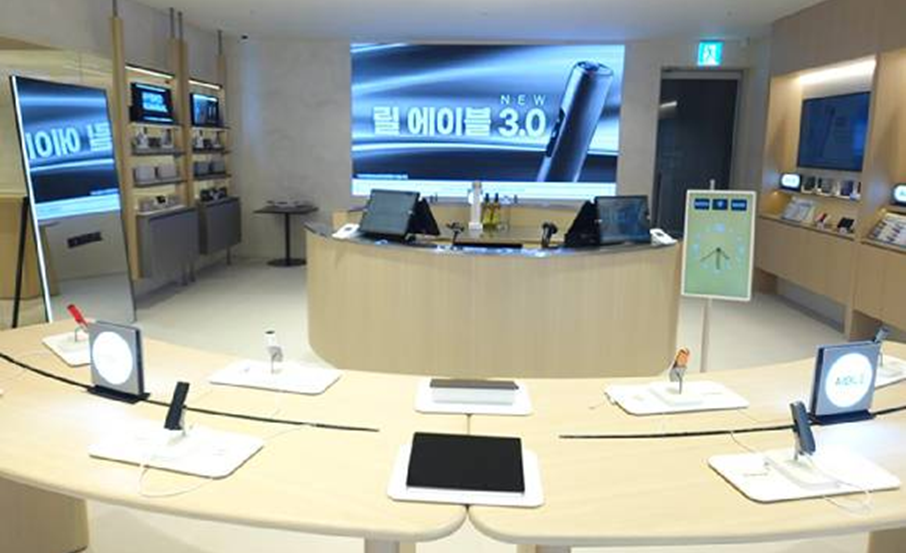
The new outlet will showcase KT&G’s latest lil devices and related products while offering services such as product demonstrations, device consultation, and after-sales support. The company is increasingly using specialized retail formats to build brand loyalty and promote its heated tobacco portfolio as competition intensifies in the South Korean market, where major international tobacco companies are also investing heavily in flagship stores and experiential marketing to attract adult smokers to next-generation products.
January 2026: Japan Tobacco Struggles for Relevance in South Korea’s Heated Tobacco Market
Japan Tobacco (JT) is attempting to regain traction in the global heated tobacco market, where competition remains intense. In its home market of Japan, JT has recently shown signs of improvement. The company launched the fourth model of its heated tobacco device, Ploom AURA, including the limited-edition color and collaboration series, a strategy aimed at boosting visibility and reinvigorating consumer interest. Together with heavy promotional support, this approach has helped lift JTI’s heated tobacco market share in Japan into the double-digit range, marking a period of progressive growth.
The contrast with South Korea is stark. South Korea is one of the world’s largest heated tobacco markets, with heated products now accounting for close to one-fifth of total tobacco consumption, up sharply from low single digits in the late 2010s. Yet the market is overwhelmingly controlled by KT&G and Philip Morris International (PMI), which together command well over 90% of heated tobacco stick sales. KT&G alone holds roughly mid-40% market share, while PMI follows closely behind.
JT’s position in South Korea remains marginal, with an estimated around 1% share of the heated tobacco segment. After withdrawing from the local heated tobacco market in 2021 due to weak performance, JT re-entered in late 2024 with updated Ploom devices, but has so far struggled to gain meaningful traction against deeply entrenched competitors with strong distribution, local brands, and loyal consumer bases.
While Japan shows that product refreshes and promotional support can still move the needle for JT, South Korea remains a far tougher battleground. The market’s size and robust growth offer theoretical opportunity, but its high level of concentration means JT faces a long and uncertain path if it hopes to translate its outsized heated tobacco investment into relevance in South Korea.
November 2025: Heated tobacco sales increased eightfold in seven years in South Korea
According to the Ministry of Strategy and Finance, sales of heated tobacco products increased by +8.3% in 2024, expanding to its share to 18.4% of the total tobacco market. This represents an eightfold increase in seven years from 2.2% in 2017. In FY24, 59.2 billion cigarettes and 13.4 billion heated tobacco sticks were sold in South Korea. KT&G led the market with 66.7% share in cigarettes and 45.9% share in heated tobacco – resulting in a combined share of 62.9%.
In the first 9 months of 2025, 42.92 billion cigarettes and 10.66 billion heated tobacco sticks were sold in South Korea – implying a heated tobacco share of 19.9% in the total tobacco market (+1.5pp vs. FY24). KT&G leads the market with 68.1% share in cigarettes and 45.8% share in heated tobacco – resulting in a combined share of 63.7%.
We project that the cigarette and heated tobacco volume will be 57 billion and 14.5 billion sticks, respectively, in FY25 – implying -3.7% decline and +8.2% growth, respectively. The overall tobacco market is set to decline from 72.6 billion to 71.5 billion sticks (-1.5% on a year-on-year basis). Heated tobacco’s share in the total market will reach 20.3% (+1.9pp vs. FY24). Euromonitor predicts that the size of the heated tobacco market will reach ₩5.2 trillion ($3.55 billion) by 2028.
July 2025: Competition between KT&G and Philip Morris heats up
KT&G is the cetagory leader in South Korean heated tobacco market with 46% share, Philip Morris International (PMI) is a close #2 with 45% share. The battle for market leadership between the two companies is heating up with new device introductions, heated tobacco stick line-up extensions and price promotions. 1% market share makes big difference as South Korea is the only market in the world where the global category leader, PMI (with 75% global share in heated tobacco) does not hold a leading position since 2022.
Most recently, KT&G started to offer 50% discount on the Lil Solid Ez devices on the offical online lil store operated by Naver. The new device was released only in mid-June and the discount offered is larger than the previously released lil devices: lil Hybrid 3.0 (28%) and lil Able 2.0 (39%). Meanhwile, Philip Morris Korea will hold an on-site consumer activation event at the annual Waterbomb music festival, targeting the younger generation with activities such as the IQOS Lounge, a relaxation space, and a treasure hunt to promote the IQOS brand. In a market where the device loyalty among exisiting users is high, companies focus on becoming the first platform for the smokers switching from cigarettes to heated tobacco.

June 2025: South Korea plays a central role in BAT’s smokeless pivot
British American Tobacco (BAT) stated that South Korea plays a central role in its pivot to smokeless products as the country is both a key innovation testbed and a competitive frontline for next-generation nicotine alternatives1. South Korea offers a unique blend of sophisticated consumers, cutting-edge technology and a dynamic regulatory environment that makes it an ideal testing ground for new nicotine products. BAT sees South Korea as a proving ground for innovation.
South Korea is the most competitive heated tobacco market in the world with KT&G (market leader), Philip Morris International (PMI, a close #2), BAT and Japan Tobacco vying for market share. BAT is the main share donor in the market, whose market share is down -1.1pp to 9.9% in 2024. South Korea is the fourth largest heated tobacco market in the world, after Japan, Russia and Italy. As BAT is no longer present in Russia, South Korea is a Top-3 market for BAT.
BAT hopes to reverse market share losses through product innovation, technology enhancement and localization strategies – developing heated tobacco sticks specifically for the Korean consumer palate. BAT also rolled out its vape brand, VUSE, in South Korea – making the Company the only major tobacco player to have a pure e-vapor product in the small, but fast-growing local market. With only about 115 million smoke-free nicotine product users versus nearly a billion smokers in the world, BAT believes vapes have a vital role in encouraging adult smokers to switch if the market order is preserved. In addition, BAT sees market opportunity for nicotine pouches in South Korea as/if consumer preferences continue to evolve.
April 2025: Three-way competition heats up in the South Korean heated tobacco market
South Korea is world’s 4th largest heated tobacco market, after Japan, Russia and Italy. 660 million packs (13.2 billion sticks) of heated tobacco is sold in South Korea last year – growing +8.3% year-on-year basis. Cigarette sales declined -4.3% to 2.87 billion packs (57.4 billion sticks) in the same period. Consequently, the share of heated tobacco products in total cigarette sales increased to 18.4% in 2024 (- up from 2.2% in 2017).
The three-way competition between KT&G, Philip Morris Korea, and BAT Rothmans in the heated tobacco category is intensifying with the launch of upgraded devices and expansion of heated tobacco stick line-ups.

KT&G leads the category with 46% share, just 2pp ahead of Philip Morris Korea (44%). BAT is a distant third with 10% category share. KT&G sells three devices in Korea: flagship lil Solid 3.0 device, premium AI-enabled lil Able 2.0 device and heated tobacco & vape hybrid lil Hybrid 3.0 device. KT&G is expected to launch a new platform in 2025. In addition, with the launch of “Mix Bonasome” in March 2025, KT&G expanded the dedicated stick (consumable) lineup of the Lil series to 37 variants, including 8 for Lil Solid, 16 for Lil Able and 13 for Lil Hybrid.
Philip Morris Korea (PMK) completed the $480 million investment into the Yangsan plant in Gyeongsangnam-do to build up decicated heated tobacco production lines. PMK launched the new IQOS Iluma i series, including the IQOS ILUMA i and IQOS ILUMA i Prime, in February 2025. PMK’s consumable line-up includes 18 TEREA variants and 4 SENTIA variants, released in April 2025.
BAT Rothmans sells glo heated tobacco device and neo sticks – in addition to the VUSE vapes. In April 2025, BAT released 5 neo variants revamped with the “Stick Seal” technology (- sealing the end of the stick to elimnate the debris left in the device after use). Moreover, in March 2025, distribution of VUSE GO Slim 2ml vapes were expanded to the entire Gyeonggi region.

March 2025: KT&G and Philip Morris continue to dominate the South Korean smoke-free market
KT&G and Philip Morris continue to dominate the ₩4-trillion (US$2.74 billion) South Korean smoke-free market as BAT Rothmans and JTI Korea struggle to make progress. The category leader with 46% share, KT&G sold 6.15 billion lil sticks (+7.7%) in 2024. Moreover, KT&G managed to increase its market share (+0.4pp) by expanding the range of consumables for lil Hybrid, lil Solid and lil Able platforms.
Philip Morris Korea (PMK) sold 5.7 billion IQOS sticks (+11.4%) in 2024 and captured 43% share in the South Korean smoke-free market. In February 2025, PMK released IQOS ILUMA i, the first IQOS line extension in two years. On the back of IQOS ILUMA i launch, PMK hopes to reclaim the top spot in the market, which it lost to KT&G in early 2022.
BAT Rothmans’ share in the S. Korean smoke-free market dipped to 9.9% (-1.1pp) despite the launch of Glo Hyper Pro in May 2024 and aggressive price promotions. JTI Korea (1% share), which re-entered the market with Ploom X Advanced launch in November 2024, is also having a hard time with Ploom tobacco sticks still being sold only in the Seoul area.
Meanwhile, tobacco companies raised the profit margin on heated tobacco devices and vapes for store owners following the state audit of National Assembly’s Industry, Trade, Energy, SMEs and Startups Committee. PMK and KT&G increased the profit margin from 6.1% to 7.5%, BAT Rothmans increased it from 6.0% to 7.7%. The margin rate for heated tobacco sticks is fixed at 9% for convenience stores.

References:

